Proudly serving Phoenix, Mesa, Glendale, Scottsdale, Tempe, Chandler & surrounding areasCall or Text 24/7: 602-449-8143
Aerial drone view of a desert residential neighborhood in Phoenix, AZ with suburban grid streets and saguaro cacti.

Affordable Fire Alarm Systems in Phoenix, AZ

Cheap fire alarm options still need to account for each property's safety and code requirements, so Phoenix Fire Alarm Systems designs, installs, monitors, and maintains systems for Phoenix homes, offices, warehouses, and multi-tenant buildings. Our affordable installation packages are scoped by square footage and occupancy classification instead of a generic flat price. Inexpensive choices can include conventional equipment for simple layouts, reuse of compliant existing conduit, or monitoring matched to the panel and signal path. For budget-friendly planning, we compare complete scopes so customers searching for the cheapest route can see how device count, wiring, permits, inspection, programming, and testing affect the estimate.

Historic homes near Encanto-Palmcroft and Willo can complicate wiring runs with plaster walls and older electrical, while newer buildings in North Phoenix or Ahwatukee may allow faster access. Downtown high-rises and mixed-use buildings near Roosevelt Row can require voice evacuation and mass notification equipment that a single-story building may not need. Permitting through the Phoenix Development Services Department and inspection scheduling with the Phoenix Fire Department Fire Prevention Division shape both cost and timing. A property walk lets us confirm occupancy, device count, access, and wiring conditions before providing a written, project-specific estimate.

Compare Fire Alarm System Prices and Options

Compare the ranges below by installed scope and pricing unit, then look at the devices, access, wiring, monitoring, and testing included in each option. The lowest prices do not always mean a lower total cost when permits, programming, final testing, or necessary wiring are omitted. Use the calculator directly after this comparison to organize the project details that can change a complete estimate.

Fire Alarm Price Ranges by Installed Scope and Service

Fire Alarm ScopePrice Range and UnitWhat the Range Covers or What Changes It
Professionally installed residential fire alarm system$300 to $1,200 or more per installed systemDevice count, wiring needs, and the required installation scope move the total.
Fire alarm monitoring$20 to $60 per monthCentral station type, cellular or phone-line signal path, and monitored-point count affect the rate.
Commercial inspection, testing, and maintenance$1,000 to $2,500 per yearBuilding size and the number of devices that must be checked change the annual service scope.
Commercial testing, maintenance, and monitoring combined$2,500 to $6,000 per yearThe combined range includes inspection, testing, maintenance, and ongoing monitoring.

Affordable Fire Alarm System Options in Phoenix, AZ

Affordable options start with fitting the equipment to the property: conventional panels can suit simple single-tenant layouts, while addressable systems add zone-level diagnostics for larger buildings. Basic DIY starter kits typically run $200 to $500, but they are not suitable where local code requires a permitted, monitored system. Compliant existing wiring, conduit, and back boxes may be reused after inspection, and low cost monitoring can be matched to the required signal path and number of points. Repairing a supported panel or phasing a larger installation by floor or wing can also reduce the upfront draw without skipping required work.

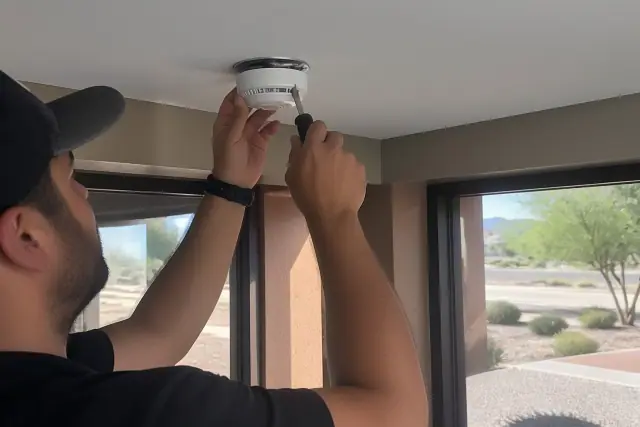
Technician installing a smoke detection sensor on a commercial ceiling in Phoenix, AZ.

Right-Size Each Fire Alarm Scope

A right-sized system begins with the floor plan, occupancy classification, and actual notification needs. That foundation helps avoid both missing required coverage and paying for capacity the building does not need.

  • Count required smoke detectors, pull stations, and horns or strobes by layout.
  • Match panel capacity to the occupancy load and planned device count.
  • Confirm whether the property requires voice evacuation or mass notification.
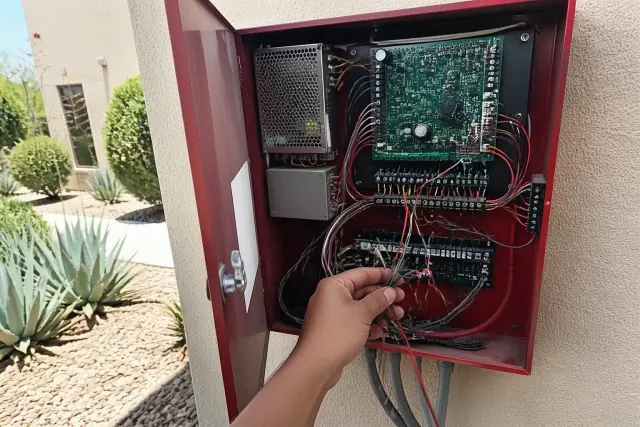
Technician wiring a fire alarm control panel cabinet at a job site in Phoenix, AZ.

Compare Fire Alarm Panel Options

The useful tradeoff is not simply higher or lower equipment price; it is how the panel fits the building and future troubleshooting needs. Conventional systems generally cost about 25 percent less than addressable systems, while addressable technology provides zone-level diagnostics for more complex properties.

  • Conventional panels fit smaller single-tenant buildings with simple layouts.
  • Addressable panels support larger buildings that benefit from detailed diagnostics.
  • Voice evacuation equipment belongs only where the occupancy and code provisions require it.
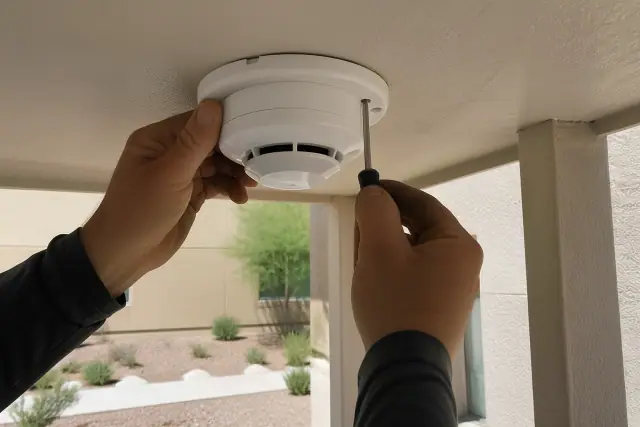
Technician mounting a smoke detection sensor to a commercial ceiling in Phoenix, AZ.

Protect Fire Alarm System Value

Long-term value comes from choosing supported equipment, preserving compliant infrastructure, and maintaining the system on schedule. Preventive attention can identify battery degradation, dust-fouled detectors, and ground faults before they develop into more disruptive repairs.

  • Keep NFPA 72 testing on the required annual, quarterly, or semiannual interval for each device type.
  • Use UL-listed components while selecting standard-grade detectors where code allows.
  • Maintain inspection and programming records to simplify future service decisions.

Fire Alarm System Cost Factors in Phoenix, AZ

Fire alarm system cost in Phoenix reflects building size, device count, panel technology, wiring route, ceiling height, access, and occupancy requirements. Commercial installations can range from roughly $1,000 for a small tenant improvement to well over a million dollars for a complex large-building addressable system. Phoenix covers 517.9 square miles, so travel and multi-building campus scheduling can also affect commercial project sequencing. Permit and inspection timing add another property-specific factor to the final scope.

Building Size, Devices, and Existing Conditions

Square footage and the number of detectors, pull stations, and notification appliances establish much of the installation and testing workload. Existing panel capacity, the condition of wiring and back boxes, and whether compliant infrastructure can be reused determine how much replacement work belongs in the scope.

Panel, Wiring, and Monitoring Choices

Material and service choices change both the initial project and ongoing operating cost. Conduit versus plenum-rated cable, conventional versus addressable panels, cellular versus phone-line monitoring, central station type, and the number of monitored points all need to be stated clearly before options can be compared.

Access, Permits, and Site Preparation

High ceilings, finished walls, difficult wiring routes, and occupied work areas add preparation and labor compared with open new construction. A complete scope should also account for permit fees, Phoenix review requirements, Fire Prevention Division inspection scheduling, and any access coordination needed for tenants or multiple buildings.

Scheduling, Programming, and Final Testing

Timing installation or major inspection work outside a peak business season can reduce operational disruption, while coordination with electrical or tenant-improvement work can avoid overlapping labor. The estimate should still include programming, final NFPA acceptance testing, and a completion timeline so required work is not deferred or rediscovered later.

Budget-Friendly Fire Alarm System Planning

Budget friendly fire alarm planning starts with a complete written scope, not a reduced safety checklist. For larger commercial properties, work can be sequenced by floor or wing, while supported panels can be upgraded instead of fully replaced when the wiring passes inspection. These choices spread or reduce the upfront budget without removing required devices, testing, or compliance work.

A complete estimate identifies device count and type, panel model, wiring scope, permit and inspection fees, monitoring setup charges, and the completion timeline. Reviewing those details line by line makes cost, durability, and system-type tradeoffs visible before work begins.

  1. Walk the property and confirm its floor plan, square footage, and occupancy classification.
  2. Inspect the panel, wiring, conduit, back boxes, and device locations for compliant reuse.
  3. Price permits, programming, monitoring setup, inspection, and final testing in the written scope.
  4. Set the work sequence and completion timeline around building access and operations.

Request an Affordable Fire Alarm System Estimate in Phoenix, AZ

Request a written fire alarm estimate based on your Phoenix property's occupancy, square footage, device count, wiring condition, panel type, and access. Phoenix Fire Alarm Systems can scope installation, monitoring, inspection, maintenance, or repair for homes, offices, warehouses, and multi-tenant buildings, then explain what is included before work starts. Service is also available across Scottsdale, Tempe, Mesa, Glendale, and Chandler.