Proudly serving Phoenix, Mesa, Glendale, Scottsdale, Tempe, Chandler & surrounding areasCall or Text 24/7: 602-449-8143
Aerial view of residential neighborhoods, desert washes, and low-rise buildings in Phoenix, AZ.

Fire Alarm System Installation & Emergency Repair Services in Gilbert, AZ

Phoenix Fire Alarm Systems designs, installs, and services fire alarm systems throughout Gilbert, Arizona. We handle new fire alarm installation, commercial systems, inspection and testing, monitoring, repair, maintenance, design, upgrades, panels, and voice evacuation or mass notification systems. Our work covers residential retrofits, retail buildouts, offices, schools, medical facilities, warehouses, and multi-building commercial sites. Each project is scoped to the building's occupancy, layout, and life-safety needs.

Gilbert's desert conditions demand careful equipment selection and maintenance. Dust from summer haboobs can enter detector chambers, monsoon humidity can stress connectors, and extreme attic or mechanical-room heat can shorten the life of unshielded electronics. We design around NFPA 72, the Town of Gilbert's adopted fire code, and the property's occupancy classification. Our team coordinates permits, installation, programming, documentation, and final acceptance testing with the local fire inspector.

Gilbert's population reached 287,285 as of 2025, creating a varied mix of older homes and fast-growing commercial construction. Because working smoke alarms reduce the risk of dying in a home fire by roughly 55 percent, we treat every system design and inspection as life-safety work.

★ ★ ★ ★ ★4.9/5 Average Rating - 20+ Years of Experience - Gilbert Fire Alarm Systems Specialists - Residential & Commercial
Gilbert Fire Alarm Services

Fire Alarm Services in Gilbert, AZ

From a single-zone retail system to an addressable network serving multiple buildings, we match the service to the property's occupancy, square footage, device count, and existing infrastructure. The options below cover design, installation, inspection, monitoring, repair, maintenance, upgrades, panels, and emergency communication. Teams coordinating properties outside the East Valley can also review our fire alarm services in Peoria, AZ .

Fire Alarm System Installation

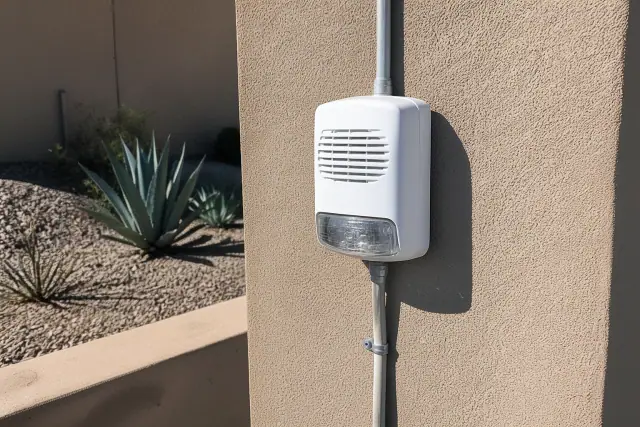
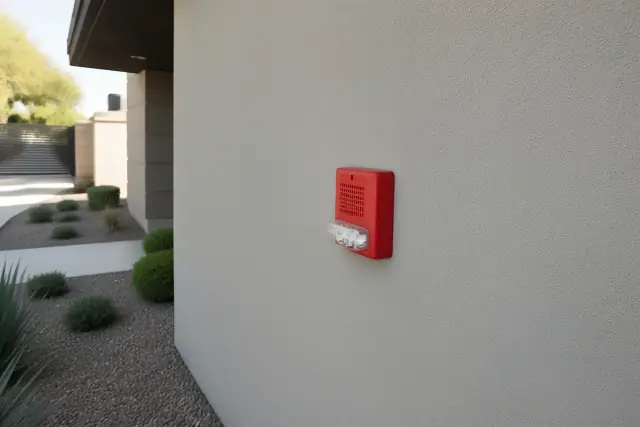
Fire alarm horn-strobe device mounted on a tan stucco wall in Gilbert, AZ.

New installation begins with a site walk and load calculation, then panel placement, device wiring, programming, and acceptance testing. We install conventional and addressable equipment for homes, retail buildouts, and warehouses, including control equipment listed under UL 864, and coordinate required Town permits before work begins.

Explore Service

Commercial Fire Alarm Systems

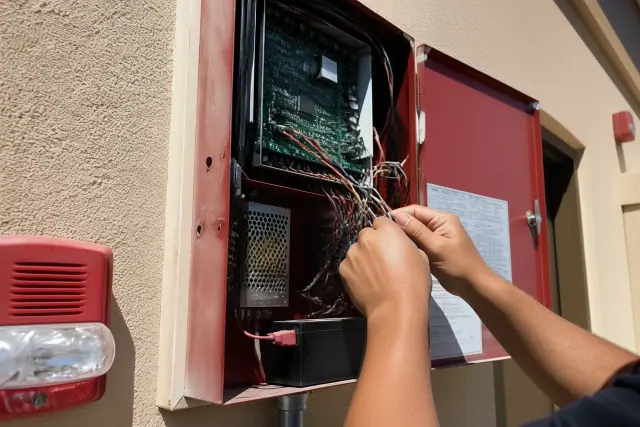
Technician wiring a fire alarm control panel inside a building in Gilbert, AZ.

For offices, medical facilities, schools, warehouses, distribution centers, and multi-tenant retail, system design follows occupancy and notification requirements. We coordinate addressable detection and alarm work with architects and general contractors and can continue with inspection, testing, and monitoring after construction.

Explore Service

Fire Alarm Inspection & Testing

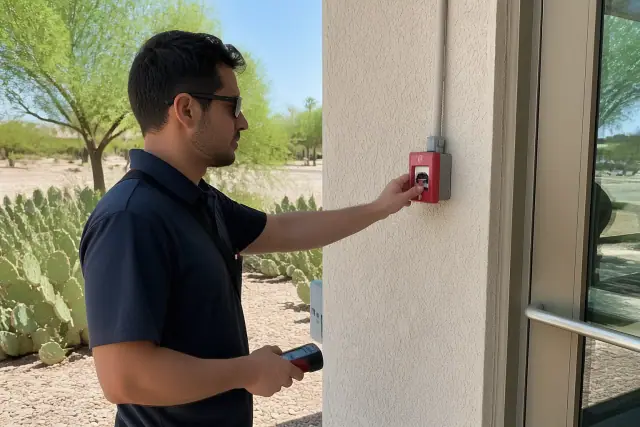
Technician performing a fire alarm pull station inspection at a building in Gilbert, AZ.

Most commercial occupancies in Gilbert require annual testing and on-site documentation. We test initiating devices, notification appliances, panel batteries, and monitoring communication paths, then prepare the report the Town or insurance carrier may request.

Explore Service

Fire Alarm Monitoring

Technician wiring a fire alarm control panel inside a building in Gilbert, AZ.

Fire alarm monitoring connects the panel to a UL-listed central station that can dispatch Gilbert Fire & Rescue when an alarm signal is received. Supervisory, trouble, and alarm signals are configured separately so system conditions are clear.

Fire Alarm Repair & Troubleshooting

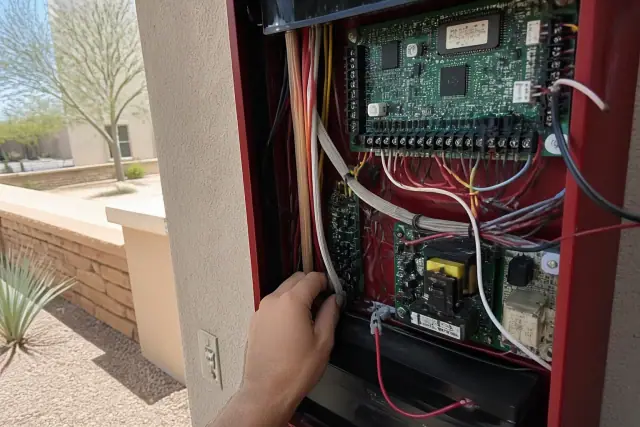
Technician repairing a wall-mounted fire alarm control panel with exposed wiring in Gilbert, AZ.

Technicians diagnose ground faults, dead batteries, corroded conductors, dust-clogged detectors, and panel trouble codes on-site. With replacement parts for most major panel brands available, repairs are usually completed in a single visit.

Fire Alarm Maintenance

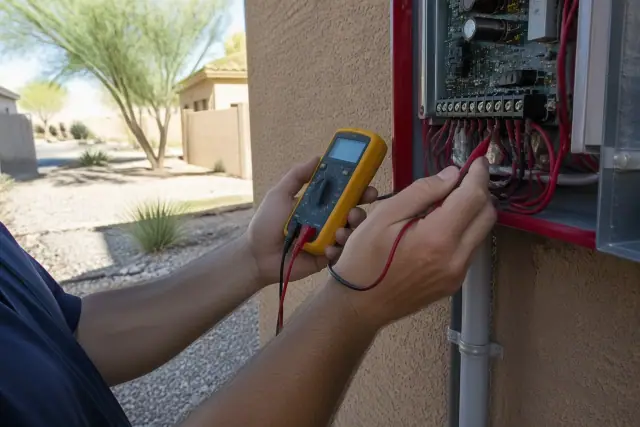
Technician using a multimeter to check voltage on a fire alarm terminal block at a jobsite in Gilbert, AZ.

Maintenance visits are built around occupancy type and device count. Scheduled checks catch corrosion, battery drift, sensor drift, and dust buildup before they cause nuisance alarms or compliance issues, with each visit documented for the property's compliance file.

Fire Alarm System Design

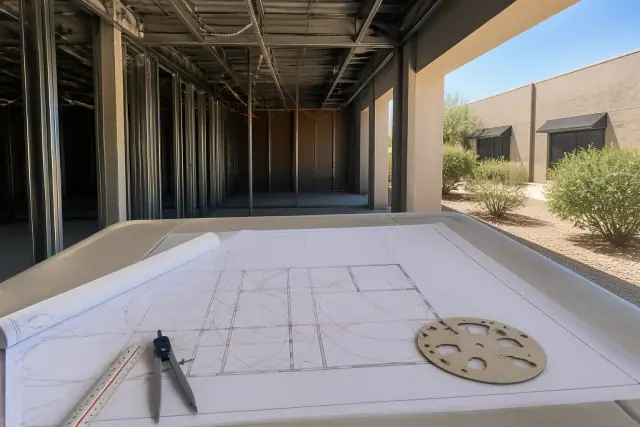
Fire alarm system design floor plan on a jobsite table at a commercial property in Gilbert, AZ.

Design starts with occupancy classification, square footage, and construction type. We apply NFPA 72 placement rules for smoke and heat detectors, pull stations, and notification appliances, then produce stamped permit drawings and coordinate with the project team.

Fire Alarm System Replacement & Upgrades

Wall-mounted fire alarm horn-strobe device installed on a stucco exterior wall in Gilbert, AZ.

Older panels may lack available replacement parts or support for current addressable technology. We assess what can be retained, then plan code-aligned replacement, wireless retrofit, voice evacuation, or monitoring upgrades with UL-listed equipment.

Fire Alarm Panel Installation & Service

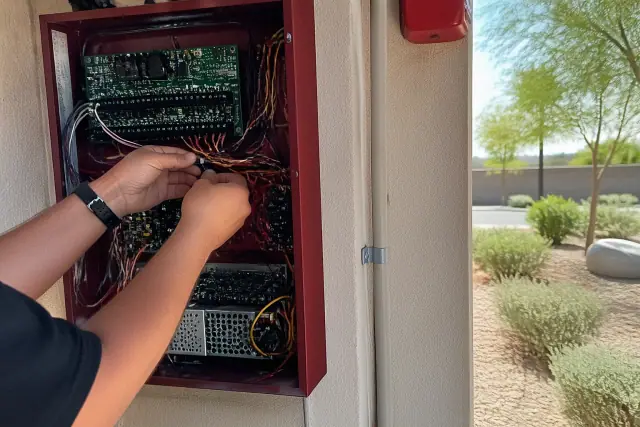
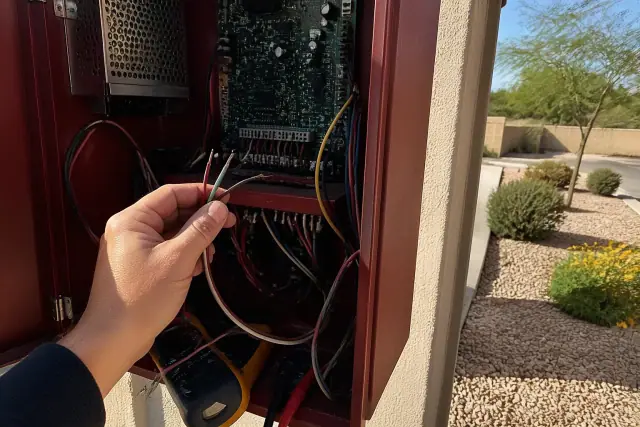
Technician wiring a fire alarm control panel inside a stucco building in Gilbert, AZ.

The control panel depends on correct placement, programming, power-supply sizing, and clear circuit labeling. We install and service panels from major manufacturers and configure them to Gilbert fire-marshal requirements for reliable future testing and troubleshooting.

Voice Evacuation & Mass Notification Systems

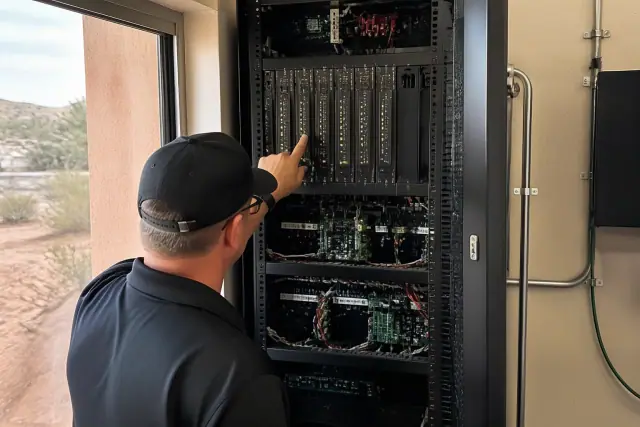
Technician inspecting fire alarm voice evacuation system components in a server rack in Gilbert, AZ.

Voice evacuation delivers specific instructions for high-rise, assembly, and educational occupancies, while mass notification can address weather, security, and other emergencies. We integrate audio, visual, and, where appropriate, text-based alerts with the fire alarm panel while meeting NFPA 72 intelligibility requirements.

System Planning

How to Choose the Right Fire Alarm System in Gilbert

Choose a fire alarm approach by starting with occupancy, building size, existing wiring, required notification, and the local review process. A small retail suite and a multi-building warehouse campus do not need the same device layout, circuit class, monitoring plan, or communication features. The right scope balances code requirements, reliability, maintainability, and the property's actual risk.

Occupancy and Building Use

Occupancy classification shapes detector spacing, notification coverage, monitoring, and evacuation requirements. Begin with how the building is used, its construction type, and the people who must receive an alarm.

Conventional or Addressable Equipment

Conventional systems report by zone and can fit simpler layouts, while addressable systems identify the individual device reporting an event. Larger or multi-building properties often need the added visibility and network control of an addressable design.

Circuit Reliability

Class A and Class B circuits respond differently to a wiring break. The design should match the occupancy's reliability needs, conductor routing, notification appliance load, and local fire-marshal requirements.

Monitoring and Notification

Plan how alarm, supervisory, and trouble conditions will report and whether occupants need audible, visual, or spoken instructions. Monitoring, voice evacuation, and mass notification solve different communication needs and should be selected deliberately.

System Age and Part Availability

Confirm whether replacement parts remain available and whether the panel can support current devices, monitoring, or addressable technology. An evaluation can separate reusable wiring and equipment from components that should be replaced.

Permits and Documentation

Gilbert projects may require stamped drawings, battery and load calculations, equipment listings, and acceptance records. Choosing a team that manages submittals and inspection coordination keeps design decisions aligned with the documents the Town expects.

Gilbert Fire Alarm Issues

Common Fire Alarm Problems in Gilbert

Summer temperatures in Gilbert regularly exceed 110 degrees, while haboob dust and monsoon humidity add stress that milder climates do not. Those conditions can affect detector chambers, wiring insulation, connectors, batteries, and panel electronics. Early troubleshooting and planned maintenance help separate an isolated device issue from a wider system problem.

Request System Testing

Dust-Clogged Smoke Detectors

Fine desert dust can enter smoke detector chambers, contribute to sensor drift, and trigger nuisance alarms. Inspection and cleaning help determine whether a device can remain in service or should be replaced.

Heat-Stressed Batteries and Electronics

Extreme heat in attics and mechanical rooms can reduce battery capacity and shorten electronic service life. Battery testing and correct equipment ratings matter when components sit in Gilbert's hottest spaces.

Corroded Conductors and Connectors

Monsoon humidity swings can contribute to corrosion at conductors and connectors. Technicians trace the affected circuit, inspect terminations, and correct the source before retesting.

Ground Faults and Wiring Breaks

Ground faults and damaged conductors can produce persistent trouble conditions or interrupt downstream devices. Circuit-by-circuit diagnosis is needed to locate the fault without masking a larger wiring issue.

Panel Trouble Codes

Panel trouble codes can point to power, battery, communication, or field-device issues. Reading the code, reviewing system history, and testing the indicated circuit provides a clearer repair path.

Sensor Drift and Nuisance Alarms

Dust exposure and changing environmental conditions can shift detector sensitivity over time. Scheduled maintenance catches drift before repeated nuisance alarms disrupt occupants or create compliance concerns.

Why Choose Us

Why Choose Phoenix Fire Alarm Systems in Gilbert?

As a licensed Gilbert fire alarm contractor, Phoenix Fire Alarm Systems handles design, permitting coordination, installation, testing, monitoring, repair, and maintenance under one project scope. Our team works to NFPA 72 and the Town's adopted requirements, with technicians trained on the panel technologies we install and service. Property owners get documentation and a system plan tied to the building rather than generic equipment recommendations.

Gilbert Permit Experience

We prepare stamped drawings for Town of Gilbert submittal, coordinate inspection scheduling, and know the documentation expected during final acceptance. That local process familiarity helps avoid preventable review delays.

ROC-Licensed, Trained Technicians

Fire alarm work requires the proper Arizona Registrar of Contractors classification. Our team carries the required ROC licensing, and technicians are trained on the panel brands and detection technologies they install and service.

Complete Testing and Coordination

We test each circuit, verify initiating and notification devices, confirm battery calculations and communication paths, and coordinate final acceptance with the Town's fire inspector. This connects design decisions to the records needed for ongoing service.

Documented Project Process

Our Fire Alarm Installation Process in Gilbert

Every project moves from building assessment to a documented design, permit review, installation, programming, circuit testing, and final acceptance. The sequence changes with occupancy and existing conditions, but the goal is consistent: a system that communicates clearly, can be maintained, and is ready for inspection.

01.

Site and Occupancy Assessment

We review occupancy classification, square footage, construction type, existing wiring, panel condition, and any prior fire-marshal violations. The site walk defines the actual design or repair scope.

02.

Design and Load Calculations

The design establishes detector and notification placement, panel location, conductor sizing, circuit class, and standby battery calculations. Plans are coordinated with architects and general contractors when construction is underway.

03.

Permit Drawings and Coordination

We produce stamped drawings for Town of Gilbert Building Division submittal and respond to the local review process. Equipment listings, calculations, and occupancy details are organized before installation begins.

04.

Installation and Programming

Technicians place the panel, run and terminate device wiring, install initiating and notification devices, label circuits, and program alarm, supervisory, and trouble functions. Work follows the approved design and NFPA 72 spacing rules.

05.

System Testing and Documentation

Every circuit is tested, including Class A redundant return paths or Class B single runs, along with panel batteries, initiating devices, notification appliances, and monitoring communication. Results are documented for the compliance file.

06.

Final Acceptance Inspection

Final acceptance testing takes place with the Town's fire inspector present. We coordinate the appointment, demonstrate system operation, address documentation questions, and prepare the system for ongoing monitoring or maintenance.

Project Applications

Fire Alarm Project Planning for Gilbert Properties

Case Study 1: Commercial New Construction: Addressable designs can coordinate offices, medical facilities, schools, warehouses, and retail centers with the architect and general contractor from panel placement through acceptance testing.

Case Study 2: Residential Retrofit: Home systems are scoped by square footage, detector count, existing wiring, and whether monitoring is included, avoiding equipment that does not serve the property's actual needs.

Case Study 3: Aging System Upgrade: Where full rewiring is impractical, wireless retrofit technology can reduce installation cost and time by 40 to 60 percent compared with full rewiring while supporting a move to current addressable equipment.

Plan Your Fire Alarm Project

Schedule a Fire Alarm
System
Consultation

Tell us about the property, occupancy, existing panel, trouble condition, or upcoming build. We will use a site walk to define the design, installation, inspection, repair, monitoring, or maintenance scope and prepare a written estimate.

Gilbert Fire Alarm Help

FAQs About Fire Alarm Systems in Gilbert, AZ

These answers cover common Gilbert questions about costs, wiring, permits, testing, monitoring, upgrades, and property requirements. Final system scope depends on occupancy, construction, existing equipment, and the Town's adopted code.

Call Our Fire Alarm Team

Residential installation generally runs $2,000 to $5,000, depending on home size, detector count, and monitoring. Commercial installation commonly ranges from $15,000 for a small buildout to $200,000 or more for large addressable systems spanning multiple buildings. Hardware typically accounts for 40-50 percent of the commercial total, with installation labor making up most of the remainder. We provide a written estimate after a site walk.

Class A wiring returns to the panel on a redundant path, so one break can leave devices on both sides able to communicate. Class B is a single run without that return path, so one break can disable downstream devices. The design phase determines which configuration fits the occupancy and local requirements.

Yes. Arizona's adopted fire and building codes require smoke detectors in specific configurations based on occupancy and building age. Gilbert Fire & Rescue also provides a servicing program for battery-operated detectors in single-family homes, while commercial properties generally face more extensive hardwired and monitoring requirements.

No. Arizona fire alarm work requires a specific contractor license classification through the Arizona Registrar of Contractors, separate from a general electrical license. Ask a contractor which NFPA 72 edition the design follows and what panel-specific training the technicians have.

Most commercial occupancies in Gilbert require annual inspection and testing, with documentation kept on-site for the fire marshal. The exact schedule depends on occupancy, devices, and applicable code, and maintenance visits may be planned more frequently when conditions warrant attention.

Dust buildup, sensor drift, heat exposure, corroded conductors, weak batteries, and wiring faults can create nuisance alarms or trouble conditions. In Gilbert, haboob dust, monsoon humidity swings, and extreme heat make environmental inspection especially important.

Conventional systems report an alarm by zone, while addressable systems identify the individual device reporting the event. Addressable equipment can suit larger or more complex buildings where precise device information and networked control improve response and service.

Panels and devices more than 15-20 years old may lack available replacement parts or support for current addressable technology. A system evaluation identifies salvageable wiring and devices before replacement or upgrade decisions are made.

Monitoring sends alarm, supervisory, and trouble signals to a UL-listed central station. With 24/7 service, the station can dispatch Gilbert Fire & Rescue when an alarm signal is received and distinguish it from non-alarm system conditions.

Voice evacuation uses spoken instructions rather than only a generic alarm tone and is required in many high-rise, assembly, and educational occupancies. Mass notification expands communication to weather, security, or other emergency events and can coordinate audio, visual, and, where appropriate, text-based alerts.

We design for homes, retail buildouts, offices, medical facilities, schools, warehouses, distribution centers, multi-tenant retail, campuses, and multi-building sites. Occupancy classification, square footage, construction type, and device count determine the final scope.

Work begins with assessment and design, followed by stamped drawings for Town of Gilbert submittal. After installation and circuit testing, final acceptance testing occurs with the Town's fire inspector present. We coordinate the process and required documentation.

Testing covers initiating devices, notification appliances, panel batteries, circuit operation, and monitoring communication paths. Reports document the results for the property compliance file and for requests from the Town or insurance carrier.

Scheduled maintenance can include detector cleaning, sensitivity review, battery checks, conductor and connector inspection, panel review, communication testing, and documentation. The visit plan is based on occupancy type, device count, environmental exposure, and the system's condition.

Coverage includes Power Ranch, Val Vista Lakes, Higley Groves, the Heritage District, Val Vista Drive, Williams Field Road, and the area near Gilbert Municipal Airport. We also take on projects in Chandler, Mesa, Queen Creek, and San Tan Valley, plus commercial and multi-site work throughout Maricopa County.