Proudly serving Phoenix, Mesa, Glendale, Scottsdale, Tempe, Chandler & surrounding areasCall or Text 24/7: 602-449-8143
Aerial drone view of a desert residential neighborhood in Phoenix, AZ with suburban grid streets and saguaro cacti.

Smoke & Heat Detectors Installation in Phoenix, AZ

Phoenix Fire Alarm Systems installs smoke and heat detectors for homes and businesses across Phoenix, Arizona. We also design commercial fire alarm systems, inspect and test existing equipment, and provide monitoring, repair, maintenance, and panel service. Our work covers new construction and retrofits, from single-family homes to offices, warehouses, hotels, hospitals, schools, and large industrial facilities. We recommend device technology and system architecture around the property's occupancy, hazards, and existing wiring.

Phoenix summers can push attic temperatures past 150°F, while monsoon dust can enter vents and trigger nuisance alarms in poorly matched spaces. Many homes in Encanto, Sunnyslope, and Maryvale also predate current smoke alarm technology. Phoenix ordinance G-5898-2014 requires a smoke alarm to be replaced no later than 10 years after its manufacture date. Our licensed fire alarm technicians walk the property, identify missing or aging devices, and explain the layout before recommending equipment.

We install UL 217 ionization and photoelectric alarms, UL 268 dual-sensor units, and UL 521 fixed-temperature and rate-of-rise heat detectors. Device placement, spacing, interconnection, permitting, and final testing follow NFPA 72 and applicable Phoenix requirements.

Phoenix Fire Alarm Systems provides fire alarm system installation throughout Phoenix and the surrounding metro area, including Scottsdale, Tempe, Mesa, Chandler, Glendale, and Gilbert.

★ ★ ★ ★ ★4.9/5 Customer Satisfaction · 33 Years of Fire Alarm Experience · Thousands of Systems Serviced · Licensed, Bonded & Fully Insured · Commercial & Residential Fire Alarm Systems

Smoke & Heat Detector Benefits

What Does Professional Detector Installation Include?

Professional installation begins with a property walk-through and a device plan matched to each room's use. Ionization, photoelectric, dual-sensor, smart, and connected alarms address different fire patterns and retrofit conditions.

Garages, mechanical rooms, commercial kitchens, loading docks, and warehouse bays may call for fixed-temperature or rate-of-rise heat detection instead of smoke sensing. That choice helps avoid nuisance alarms caused by cooking heat, vehicle exhaust, dust, or high airflow.

The completed scope can include hardwired power, backup batteries, whole-home interconnection, panel programming, monitoring connections, permit coordination, and functional testing. We then document device model numbers, locations, and test dates for the property record.

Why Proper Detection Matters

Correctly selected and placed devices detect the fire conditions most likely in each space while reducing avoidable false alarms. A coordinated system also gives occupants clearer warning and provides usable records for inspections and insurance requests.

  • NFPA research for 2018 through 2022 found a 60 percent lower death rate per 1,000 reported home fires when smoke alarms operated as designed.
  • Early detection of a smoldering fire can provide more time to evacuate before flashover.
  • Dual-sensor alarms respond to both fast-flaming and smoldering fire patterns.
  • Interconnected alarms sound throughout a home when any linked device detects smoke.
  • Proper spacing avoids dead-air pockets and excessive distance between devices.
  • Backup batteries keep hardwired alarms active during monsoon power outages.
  • Heat detection can protect dusty or high-heat spaces without constant smoke-alarm trips.
  • Installation and test records give owners, inspectors, and insurance agents a clear device history.
Detector Installation Services

Smoke & Heat Detector Services

Our work extends from individual detector replacement to integrated commercial alarm systems. Each service is planned around the property's occupancy, existing equipment, applicable code, and the records needed after completion.

Residential Smoke Detector Installation

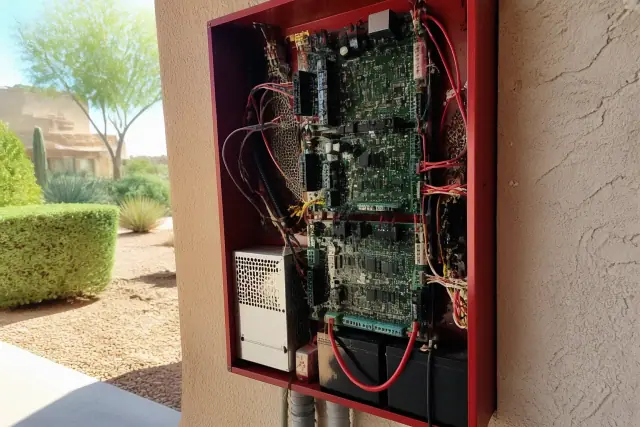
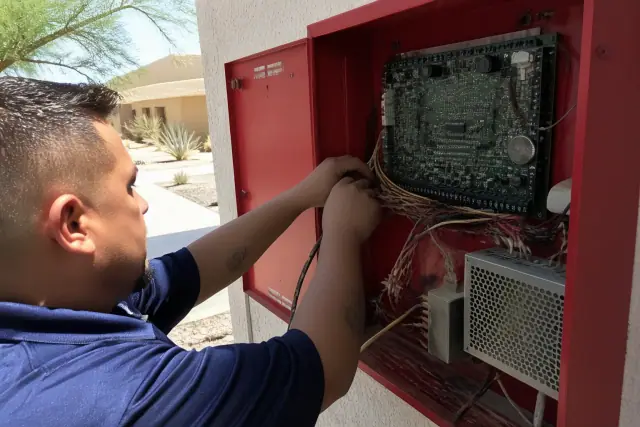
Technician wiring a commercial fire alarm control panel in Phoenix, AZ, with desert scenery in the background.

We install and replace alarms inside bedrooms, outside sleeping areas, and on each level of a home, including basements where present. New-construction layouts use hardwired interconnection, while wireless RF linking can connect alarms in older finished homes where new low-voltage cable is impractical.

Request Estimate

Commercial Fire Alarm Systems

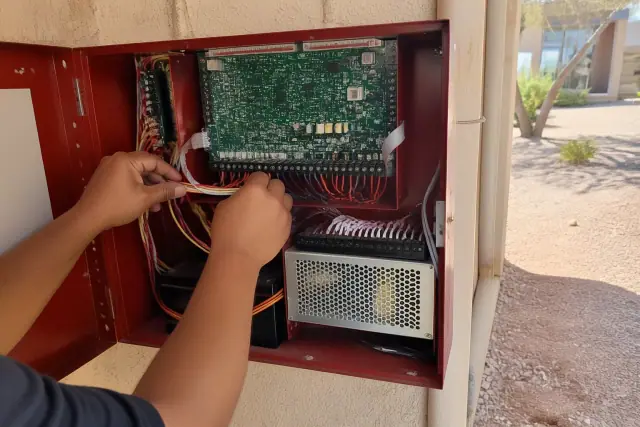
Technician hands wiring a fire alarm control panel during an installation in Phoenix, AZ.

Commercial design accounts for square footage, ceiling height, and occupancy classification, so a retail space on Camelback Road receives a different device layout than a warehouse near Sky Harbor. We can integrate detection with HVAC shutdown, elevator recall, door release hardware, and the building control sequence, then provide as-built drawings for service technicians and the authority having jurisdiction.

Request Estimate

Fire Alarm Inspection and Testing

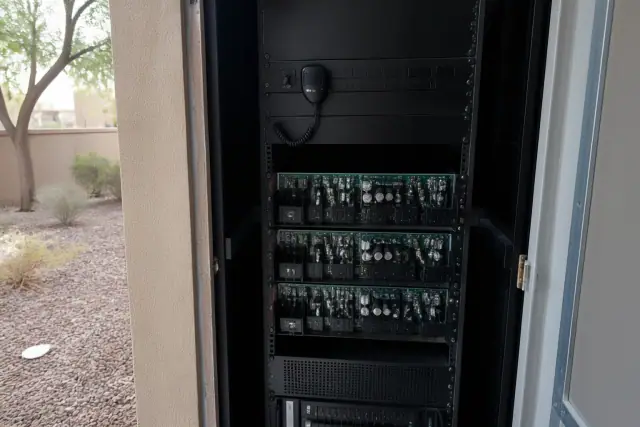
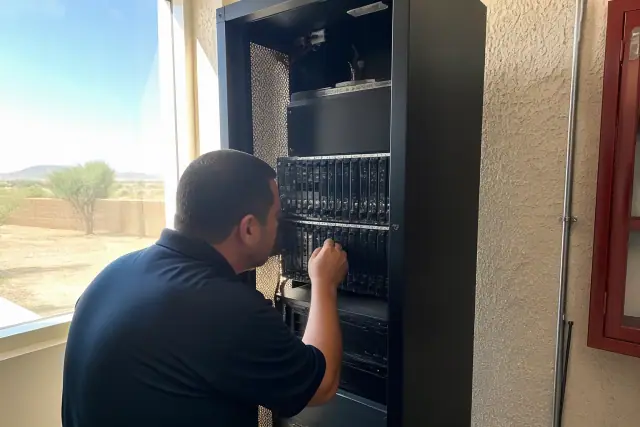
Technician inspecting modular amplifier cards in a fire alarm voice evacuation rack at a jobsite in Phoenix, AZ.

A functional test verifies initiating devices, notification appliances, panel operation, and communication with the monitoring station. Reports reference NFPA 72 criteria, device serial numbers, and pass/fail results, with scheduling arranged around building operating hours when possible.

Request Estimate

Monitoring and Emergency Communication

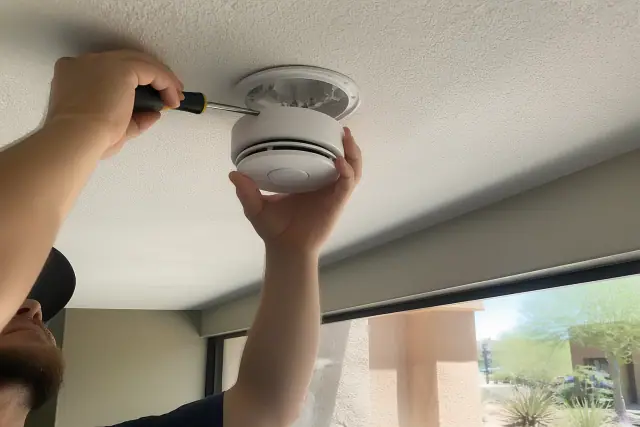
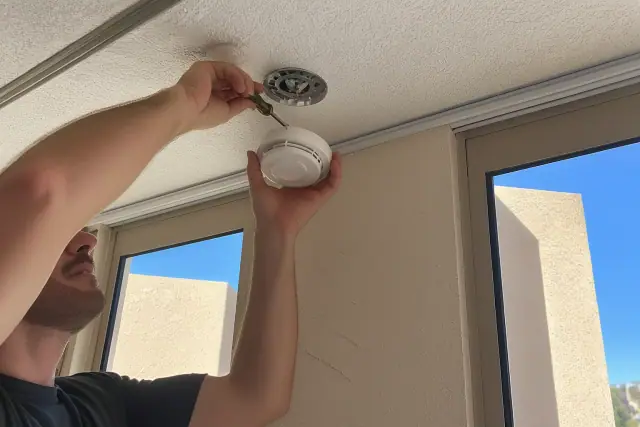
Technician installing a smoke detector on a commercial ceiling in Phoenix, AZ.

Our 24/7 monitoring routes alarm signals through a UL 827 listed central station that can dispatch the Phoenix Fire Department on an alarm condition. Voice evacuation and mass notification systems add spoken, zoned instructions for hospitals, hotels, schools, high-rise offices, and large industrial facilities where a single blanket signal may not fit the response plan.

Request Estimate

Fire Alarm Repair and Troubleshooting

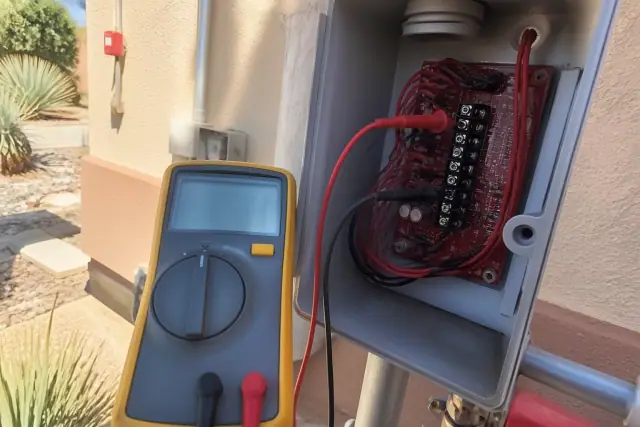
Technician testing fire alarm system voltage with a multimeter at a building in Phoenix, AZ.

We trace panel trouble codes, detector pre-alarms, dropped monitored lines, wiring faults, loose terminals, and corroded junction boxes to the device or circuit causing the problem. Conventional zones narrow the search by area, while addressable panels identify the exact device; we service both system types and provide a written repair summary.

Request Estimate

System Design, Upgrades, and Panel Service

Technician wiring a fire alarm control panel inside a building in Phoenix, AZ.

System replacement becomes practical when a panel is beyond manufacturer support or a building's occupancy no longer fits the original design. We handle design, panel installation, device replacement, permit coordination, and final inspection, including transitions from outdated conventional systems to addressable or hybrid platforms when appropriate for the building.

Request Estimate
Detector Technology

Smoke & Heat Detector Options

Detector selection depends on the fire signature, normal airborne conditions, power source, existing wiring, and how the occupants need to receive an alert. These options cover fast-flaming and smoldering fires, dusty or high-heat spaces, whole-home signaling, and remote notification.

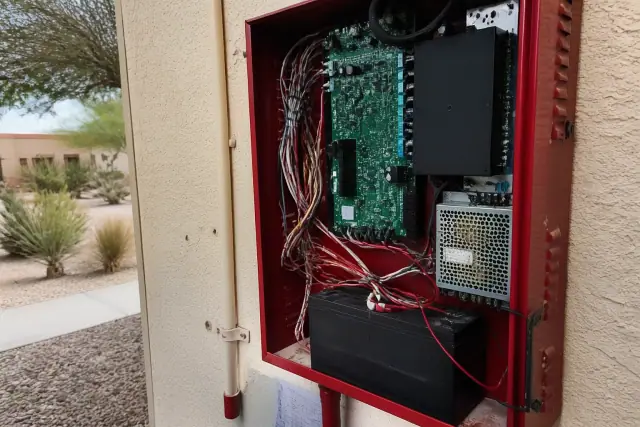
Technician wiring a fire alarm control panel cabinet during an installation in Phoenix, AZ.

Ionization Smoke Detectors

Ionization detectors react quickly to flaming fires that produce relatively little visible smoke. They can fit living rooms and bedrooms where open-flame ignition sources are a concern, but placement must account for cooking steam that can cause nuisance alarms.

  • Fast response to flaming-fire conditions
  • Useful near living rooms and bedrooms
  • Available as UL 217 listed alarms
  • Inexpensive to replace
  • More prone to cooking-steam nuisance alarms
Request Estimate
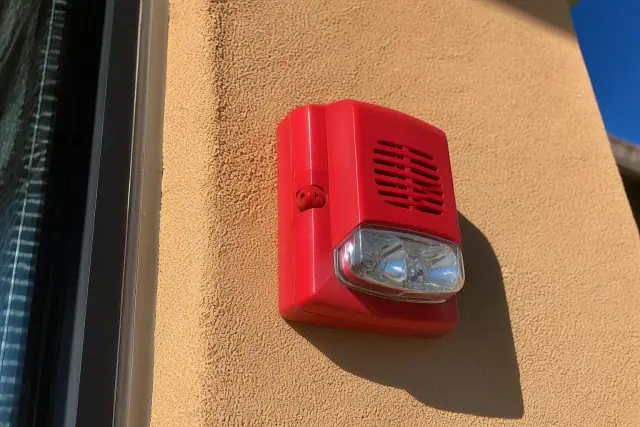
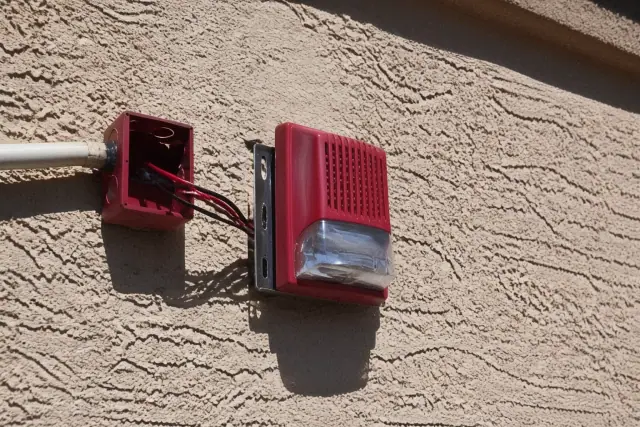
Wall-mounted fire alarm horn-strobe device installed on a stucco exterior wall in bright sunlight in Phoenix, AZ.

Photoelectric Smoke Detectors

Photoelectric detectors use a light-scattering sensor to recognize smoke from slow, smoldering fires. They are well suited to hallways near kitchens and to homes where wiring, insulation, or upholstery presents the smoldering-fire concern.

  • Light-scattering sensing method
  • Quick response to smoldering smoke
  • Useful in hallways adjacent to kitchens
  • Addresses wiring and insulation fire patterns
  • A practical option in homes with older electrical panels
Request Estimate
Technician installing a wireless smoke detector on a commercial ceiling in Phoenix, AZ.

Dual-Sensor Smoke Detectors

Dual-sensor detectors combine ionization and photoelectric technologies in one housing. They cover both fast-flaming and smoldering fire behavior and are the detector type we install in the majority of Phoenix residential retrofits.

  • Ionization and photoelectric sensing in one unit
  • Coverage for fast-flaming fires
  • Coverage for smoldering, low-oxygen fires
  • UL listed housing options
  • Designed to reduce missed detections and nuisance alarms
Request Estimate
Technician inspecting fire alarm voice evacuation amplifier cards in a server rack in Phoenix, AZ.

Hardwired and Connected Smoke Detectors

Hardwired alarms operate on 120-volt household circuits and can use a sealed 10-year lithium backup battery during an outage. Interconnected, smart, wireless, and hybrid configurations extend the alert throughout the property or to a phone when the occupant is away.

  • 120-volt primary household power
  • Sealed lithium backup for monsoon outages
  • Whole-home alert through interconnection
  • Wireless RF linking for finished retrofits
  • Phone alerts from compatible smart technology
Request Estimate
Wall-mounted fire alarm horn-strobe device installed on a stucco exterior wall in Phoenix, AZ.

Fixed-Temperature and Rate-of-Rise Heat Detectors

Heat detectors are suited to spaces where smoke sensing would be disrupted by dust, exhaust, heat, or airflow. Fixed-temperature, rate-of-rise, and combination smoke-and-heat units let the device plan match the hazard without adding unnecessary smoke alarms.

  • UL 521 fixed-temperature and rate-of-rise options
  • Fixed thresholds commonly rated from 135°F to 194°F
  • Rate-of-rise activation at roughly 12 to 15 degrees per minute
  • Applications in garages, mechanical rooms, commercial kitchens, and industrial bays
  • Combination heads can reduce device counts where panel zone capacity is limited
Request Estimate
Finding Your Right Fit

Choosing the Right Detector Approach

The right approach comes from the room use, ceiling conditions, fire behavior, existing wiring, panel capacity, and inspection requirements-not a single device used everywhere. Our recommendations connect those property details to a practical layout, compatible equipment, and a clear path through installation and testing.

Code-Compliant Device Planning

Our technicians apply NFPA 72 spacing, wiring, interconnection, and programming criteria along with Phoenix's locally amended International Fire Code. When the scope requires a permit, we submit through the City of Phoenix Development Services Department and coordinate the required inspection.

Phoenix Property Experience

Our project experience includes single-family homes in Arcadia, mid-rise office retrofits downtown, and occupancy-based warehouse systems near Sky Harbor. That range helps us account for finished-wall retrofit limits, monsoon dust, extreme attic heat, commercial control interfaces, and different evacuation needs.

Documented Testing and Records

After installation, we record device model numbers, locations, and test dates and provide a signed certificate of completion when applicable. Testing reports document the criteria and pass/fail results that the Phoenix Fire Prevention Bureau or an insurance carrier may request.

What Sets Us Apart

Why Choose Us for Detector Installation?

Phoenix Fire Alarm Systems combines licensed fire alarm work with device-specific planning, permit coordination, functional testing, and useful closeout records. We evaluate the property before recommending equipment, explain how each detector or system component fits the hazard, and carry the work through the required inspection.

Request an Assessment

Detectors Older Than 10 Years

A detector may still look normal after its permitted service life has ended. We check manufacture dates, identify chirping or missing units, and plan replacement before an aging alarm becomes an unnoticed gap in coverage.

Dust and Steam Nuisance Alarms

Haboob dust can enter loading docks and warehouse bays, while cooking steam and bathroom moisture can trip a poorly located smoke alarm. The solution may be a different sensing technology, better placement, or heat detection in a space where normal airborne conditions make smoke sensing unreliable.

Improper Placement and Spacing

Detectors placed near ceiling fans, HVAC supply vents, shower steam, corners, or dead-air pockets may react late or alarm unnecessarily. During inspection, we also look for open-ceiling runs spaced beyond the 30-foot maximum described in the draft and correct the layout before a city inspection exposes the issue.

Missing Interconnection or Backup Power

A stand-alone detector may not warn people at the other end of a home, and a hardwired unit without working backup can lose protection during an outage. We evaluate interconnection, circuit power, battery condition, and wireless retrofit options so every intended device participates in the alert.

Panel Trouble and Communication Faults

A recurring trouble code, constant detector pre-alarm, or dropped monitoring line can come from the detector, panel board, field wiring, junction box, or a loose terminal. Device-level troubleshooting isolates the actual fault before parts are replaced.

Outdated Systems and Occupancy Changes

An unsupported panel or a new occupancy can make the original alarm design unsuitable even if individual devices still operate. An office converted to a restaurant, for example, introduces commercial kitchen hazards that may require a redesigned mix of smoke detection, heat detection, panel capacity, and notification.

How It Works

Our Detector Installation Process

The process moves from a property-specific assessment to a code-based layout, installation, functional testing, and closeout records. Each step is designed to show what is needed, why it is needed, and how the finished system was verified.

01.

Walk the Property

We inspect room use, ceiling conditions, existing alarms, manufacture dates, panel type, wiring, and normal sources of dust, steam, heat, or airflow. The walk-through identifies missing coverage and separates device faults from broader system issues.

02.

Match Devices to Each Space

We choose ionization, photoelectric, dual-sensor, connected smoke detection, fixed-temperature heat detection, rate-of-rise heat detection, or combination units according to the hazard and environment. Commercial plans also account for occupancy classification, control interfaces, panel zones, and notification needs.

03.

Design Placement and Interconnection

The layout applies NFPA 72 device spacing and avoids corners, supply vents, fans, bathrooms, and other conditions that can delay detection or cause false alarms. We plan hardwired or wireless interconnection so linked alarms and panel functions respond together as intended.

04.

Coordinate Permits and Install

When the scope requires it, we prepare the permit submittal for Phoenix Development Services and coordinate inspection requirements. Installation then covers device mounting, wiring or RF linking, panel connections, programming, and any designed building-control interfaces.

05.

Test Every Device and Signal

We run a functional test to confirm each initiating device activates the panel and that notification appliances, control responses, and monitoring communication operate correctly. The local fire marshal or other authority having jurisdiction is present when required.

06.

Deliver Records and Maintenance Guidance

Closeout records identify device models, locations, serial numbers when captured in testing, test dates, and results, along with a certificate of completion when applicable. We also explain the maintenance schedule, including annual functional testing for most occupancies and additional quarterly testing commonly needed in high-occupancy buildings such as hospitals and hotels.

Protect Your Property

Schedule a Detector
Installation
Consultation

If your detectors are chirping, missing, poorly placed, or past their service life, request a property walk-through. We can evaluate residential alarms, commercial detection, panel connections, monitoring, inspection needs, and the next practical step.

Detector Installation Help

Smoke & Heat Detector FAQs

These answers cover Phoenix installation rules, device placement, detector technology, testing, monitoring, and replacement decisions. A property assessment is still the right way to match those requirements to a specific home or commercial building.

Call Our Experts

Phoenix applies the locally adopted International Fire Code, NFPA 72 requirements, and city ordinance G-5898-2014, which limits a smoke alarm's service life to 10 years from its manufacture date. New construction and major renovations require hardwired, interconnected alarms in every bedroom, outside each sleeping area, and on every level of the home, including basements.

Smoke alarms should be inside every bedroom, immediately outside sleeping areas, and on every level of the home. NFPA 72 guidance in the draft keeps alarms at least 4 inches from the wall-ceiling corner and away from kitchens, bathrooms, and HVAC supply registers where steam, cooking exhaust, or airflow can disrupt detection.

The Phoenix Fire Department has historically offered basic smoke-alarm assistance for qualifying residents, so current program availability should be confirmed with the department. That type of assistance does not replace a code-compliant hardwired and interconnected system and does not cover heat detectors, dual-sensor units, commercial systems, or panel-tied monitored installations.

Phoenix ordinance G-5898-2014 states that a smoke alarm cannot remain in service longer than 10 years from its manufacture date. The date on the device-not its appearance or whether it still chirps during a button test-determines when replacement is due.

Ionization detectors react quickly to fast-flaming fires with relatively little smoke, while photoelectric detectors use light scattering to respond to slow, smoldering fires. Dual-sensor devices combine both methods when the property needs coverage for both fire patterns.

Heat detection is useful in garages, mechanical rooms, commercial kitchens, dusty loading docks, and high-airflow industrial bays where smoke alarms may trip on normal conditions. A fixed-temperature or rate-of-rise device detects heat while avoiding nuisance alarms from cooking heat, vehicle exhaust, or haboob dust.

A rate-of-rise detector responds to a rapid temperature increase rather than waiting for one absolute threshold. The devices described in the draft commonly activate around a 12 to 15 degree-per-minute rise, which can identify a fast-developing fire in a warehouse or industrial space near the Loop 202 corridor.

Hardwired units use a 120-volt household circuit for primary power and can include a sealed 10-year lithium backup battery. That backup keeps the detector active when grid power drops during a monsoon outage.

Yes. When running new low-voltage cable through finished drywall is impractical, wireless RF linking can interconnect compatible alarms so one triggered detector sounds the others. The installation plan still needs to account for device compatibility, power, placement, and the existing property layout.

NFPA 72 calls for a full functional test at least annually for most occupancies. High-occupancy buildings such as hospitals and hotels commonly need quarterly testing in addition to the annual inspection, particularly for sprinkler supervisory devices and voice evacuation speakers.

Phoenix Fire Alarm Systems routes monitored signals through a UL 827 listed central station. On an alarm condition, the station can dispatch the Phoenix Fire Department, while facilities with specialized procedures can use silent notification options for staff before a full evacuation signal.

The installation record identifies device model numbers, locations, and test dates. After the functional test and any required authority inspection, you receive a signed certificate of completion for your files, along with test documentation that can be provided to the Phoenix Fire Prevention Bureau or an insurance carrier on request.

Replacement or redesign may make sense when the panel is beyond manufacturer support or the building's occupancy has changed enough that the original system no longer fits. Depending on the property, an outdated conventional system may be replaced with an addressable or hybrid platform sized to the current device, control, and notification needs.