Proudly serving Phoenix, Mesa, Glendale, Scottsdale, Tempe, Chandler & surrounding areasCall or Text 24/7: 602-449-8143
Aerial view of residential neighborhoods, desert washes, and low-rise buildings in Phoenix, AZ.

Fire Alarm System Installation & Preventive Maintenance in Goodyear, AZ

Phoenix Fire Alarm Systems is a licensed fire alarm contractor serving Goodyear homes, offices, warehouses, retail spaces, and multi-family properties. We design and install residential and commercial fire alarm systems, including addressable panels, smoke and heat detection, pull stations, and horn/strobe notification. Our services also cover inspection and testing, 24/7 monitoring, repair, preventative maintenance, system replacement, and panel upgrades. For larger or more complex occupancies, we plan voice evacuation and mass notification systems around the building's use and layout.

Goodyear grew from 95,294 residents at the 2020 census to an estimated 118,186 in 2024, adding new subdivisions and commercial corridors near Loop 303 alongside older buildings changing occupancy. Desert heat can raise attic and enclosure temperatures, while construction dust can enter detectors and contribute to nuisance alarms or early sensor failure. We account for those conditions during device selection, layout, wiring, programming, and testing. Every project follows a licensed, code-driven path from site assessment and design through permitting and final acceptance.

Coverage includes Estrella Mountain Ranch, Palm Valley, Canyon Trails, Wildflower Ranch, Pebblecreek, Cottonflower, the Goodyear Ballpark area, and commercial or industrial properties near Loop 303 and Van Buren Street. We also serve property owners across the Southwest Valley and Maricopa County.

★ ★ ★ ★ ★4.9/5 Average Rating - 20+ Years of Experience - Goodyear Fire Alarm Systems Specialists - Residential & Commercial
Installation & Service

Fire Alarm Services in Goodyear, AZ

We match each fire alarm scope to the property's occupancy, square footage, construction, device count, and inspection requirements. Services range from residential detector upgrades to commercial addressable systems, monitoring, testing, repair, design, and replacement. Property owners managing nearby sites in Avondale, AZ can work with the same team for fire alarm planning and service.

Fire Alarm System Installation

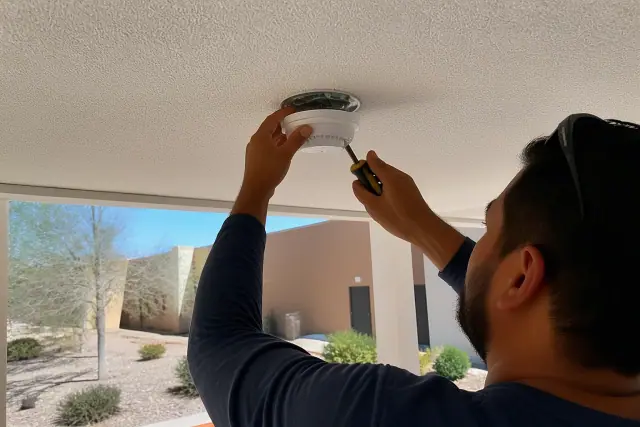
Technician installing a smoke detector on a commercial ceiling in Goodyear, AZ.

Installation begins with a site assessment of the building's use, size, construction, and required coverage. We carry residential and commercial projects through device layout, wiring, panel programming, functional testing, and final inspection sign-off.

Explore Service

Commercial Fire Alarm Systems

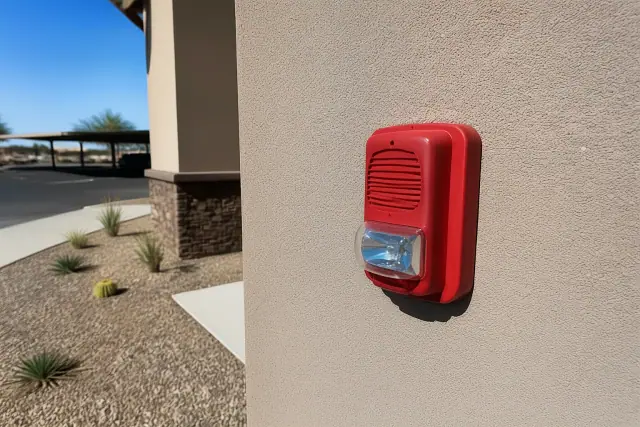
Wall-mounted fire alarm horn-strobe device installed on a commercial building exterior in Goodyear, AZ.

Offices, retail spaces, restaurants, warehouses, and multi-family buildings may need addressable panels with pull stations, smoke and heat detection, and horn/strobe notification. We plan extended zones for open warehouse floors and kitchen-suppression tie-ins where restaurant layouts require them.

Explore Service

Fire Alarm Inspection & Testing

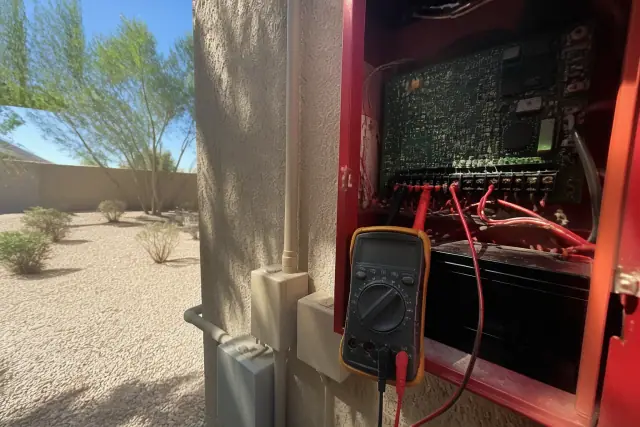
Technician using a multimeter to test a fire alarm system at a building in Goodyear, AZ.

Testing follows NFPA 72 and NFPA 25 schedules, with most commercial systems inspected annually and some components checked quarterly or semi-annually. Each visit documents device results, deficiencies, repairs, communication paths, and compliance status for the property file.

Explore Service

Fire Alarm Monitoring

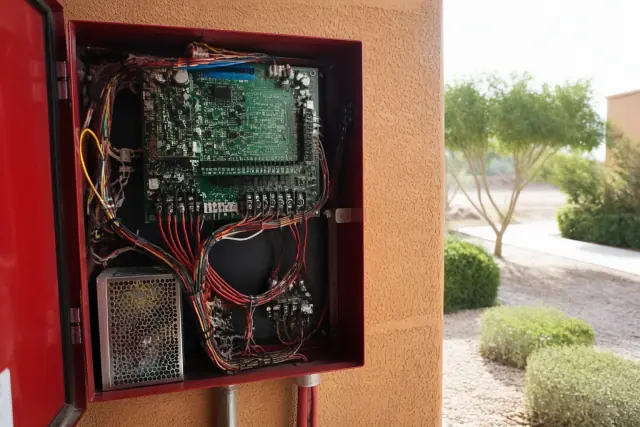
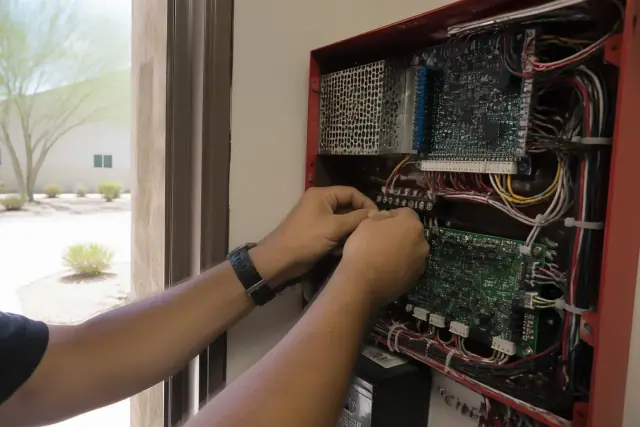
Technician hands wiring a fire alarm control panel cabinet with circuit boards in Goodyear, AZ.

A compatible panel can connect to 24/7 central-station monitoring so an alarm signal can be relayed to the Goodyear Fire Department even when no one is on site. We set up monitoring on new systems and can transfer compatible existing panels.

Fire Alarm Repair & Troubleshooting

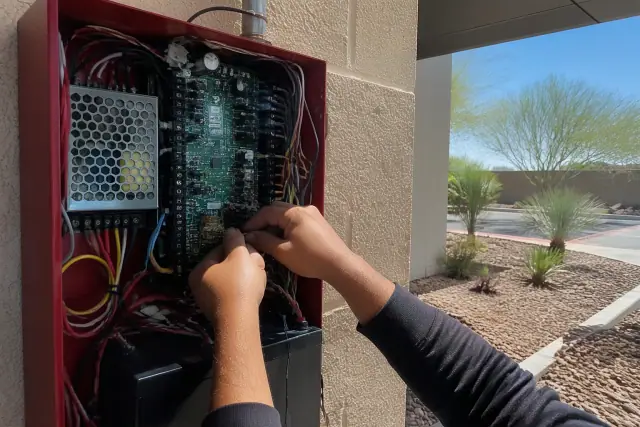
Technician hands wiring a fire alarm control panel cabinet with desert landscaping visible in Goodyear, AZ.

We trace trouble signals, false alarms, ground faults, open circuits, failed batteries, and dust-contaminated detector heads to the affected device or circuit. After replacing or correcting the failed component, we retest the full circuit to verify the repair.

Fire Alarm Maintenance

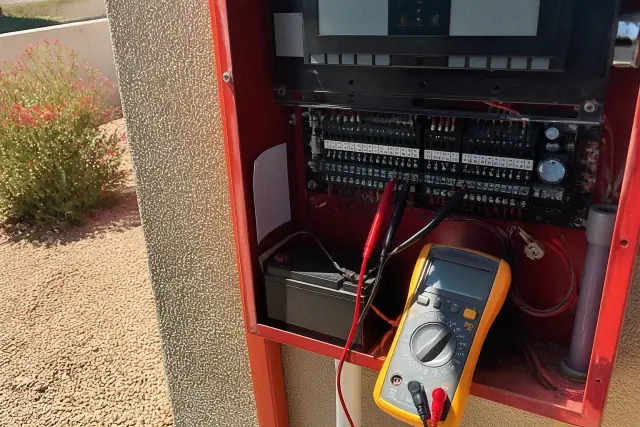
Technician using a multimeter to test a fire alarm terminal block at a building in Goodyear, AZ.

Preventative maintenance helps identify weakening batteries, dirty detectors, communication issues, and repeat deficiencies during scheduled service. Keeping records current also makes renewal reviews and fire-prevention audits easier to address.

Fire Alarm System Design

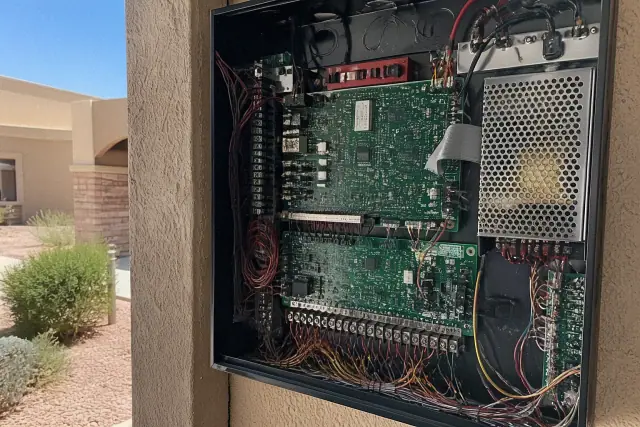
Fire alarm control panel with visible circuits mounted on a stucco wall at a jobsite in Goodyear, AZ.

Design starts with a site walk and plan review, followed by device spacing for smoke detectors, heat detectors, and notification appliances. We prepare stamped drawings for City of Goodyear permit review based on occupancy classification, square footage, and the proposed system layout.

Fire Alarm System Replacement & Upgrades

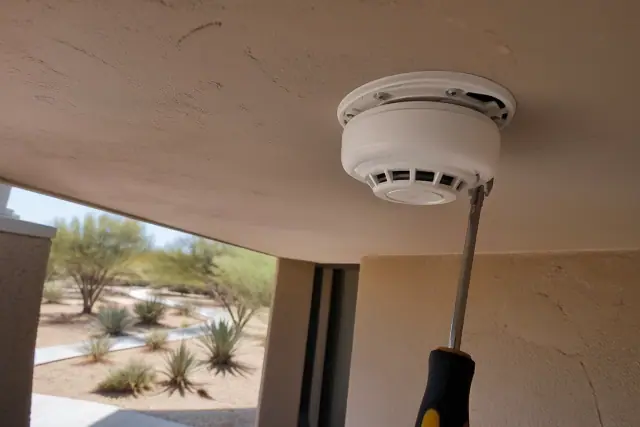
Technician installing a smoke detector on a ceiling junction box in Goodyear, AZ with desert landscape in the background.

Many commercial fire alarm components reach the end of reliable service within a 10- to 15-year window. We evaluate whether firmware updates remain available, whether parts are discontinued, and whether repeat deficiencies, wiring condition, notification-appliance layout, or current device demand point to a targeted upgrade or full replacement.

Fire Alarm Panel Installation & Service

Technician wiring a fire alarm control panel inside a building in Goodyear, AZ.

Panel work includes new addressable control equipment, zone programming, communication-path testing, and integration with existing building systems. Battery backup testing and primary-power verification are included so the panel is evaluated as a complete control point.

Voice Evacuation & Mass Notification Systems

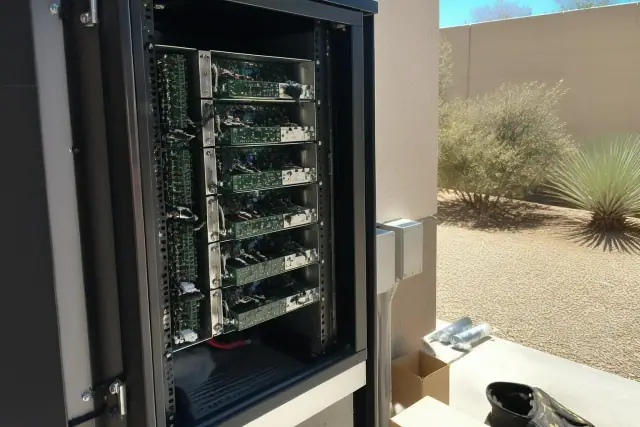
Technician inspecting modular amplifier cards in a fire alarm server rack at a site in Goodyear, AZ.

High-rise buildings, large assembly occupancies, and many healthcare or educational facilities may require emergency communications under NFPA 72. Voice systems deliver prerecorded or live instructions when horn/strobe notification alone cannot provide the directional guidance a complex building needs.

System Selection

How to Choose the Right Fire Alarm Scope in Goodyear

The right system depends on the building's occupancy, layout, existing equipment, notification needs, and permit path. These six factors help define an appropriate scope before installation, monitoring, or replacement work begins.

Match the Building and Occupancy

A single-family home, multi-family property, office, restaurant, warehouse, and assembly space do not share the same detection or notification needs. Start with the building's use, square footage, construction materials, sleeping areas, and expected occupant movement.

Confirm Code and Permit Requirements

Ask how the design will address NFPA 72, the locally adopted residential code where applicable, and City of Goodyear plan review. Fire alarm control panels should also use equipment with the UL 864 listing identified in the project requirements.

Define Monitoring and Notification

Determine whether the property needs central-station monitoring, audible and visual notification, or voice instructions for evacuation. The answer affects panel compatibility, communication paths, appliance placement, and system programming.

Plan for Heat and Dust

Goodyear's desert heat and construction dust can shorten equipment life or cause nuisance alarms when device location and enclosure conditions are ignored. Equipment selection and maintenance access should reflect the actual environment around each panel and detector.

Check Lifecycle and Parts Availability

The National Fire Protection Association recommends replacing smoke alarm systems every 10 years. For other equipment, confirm that firmware updates and replacement parts remain available, then check battery condition and whether the panel can accept devices required by the current layout.

Set a Property-Specific Scope

New construction, occupied retrofits, and system expansions create different wiring, access, and scheduling constraints. A site walk should define device count, reusable components, permit work, testing, and a project-specific estimate before installation begins.

Goodyear System Issues

Common Fire Alarm Problems in Goodyear

Trouble signals and nuisance alarms often trace back to environmental buildup, wiring faults, backup-power problems, or equipment that cannot meet the building's current needs. Device-level troubleshooting separates an isolated repair from a larger system deficiency.

Request System Inspection

Dust Intrusion

Dust from construction and unpaved areas can enter detector heads, contribute to nuisance alarms, and accelerate sensor problems. Cleaning, testing, and careful device placement help identify whether buildup or a failed detector is responsible.

Heat Exposure

Attics and electrical enclosures can reach temperatures beyond what poorly selected components tolerate. Repeated trouble in a hot location calls for an evaluation of equipment rating, placement, enclosure conditions, and remaining service life.

Ground Fault Conditions

A ground fault can place the panel in trouble and make the affected circuit difficult to isolate without systematic testing. We trace wiring and devices to find the fault, correct it, and verify the circuit before closing the service call.

Open Circuits

Loose terminations, damaged conductors, or improper original wiring can break continuity and create an open-circuit trouble signal. Testing at the panel and device level identifies where the path is interrupted.

Failed Backup Batteries

A weak or failed battery can trigger recurring panel trouble and leave backup power below the system's requirement. Battery testing belongs with primary-power and communication-path verification, not as a stand-alone guess.

Aging or Obsolete Panels

Older conventional panels may no longer receive firmware updates, may rely on discontinued parts, or may lack capacity for added devices. Repeat deficiencies can indicate that a planned addressable-panel upgrade is more practical than another isolated repair.

Why Choose Us

Why Choose Phoenix Fire Alarm Systems in Goodyear?

Phoenix Fire Alarm Systems provides one licensed, accountable path for design, permitting, installation, monitoring, inspection, repair, and maintenance. Our work is organized around Goodyear's review process and the desert conditions that affect local fire detection equipment.

Goodyear Process Knowledge

We plan documentation for the City of Goodyear Fire Prevention review process and the final inspection required before acceptance. Arizona Registrar of Contractors licensing provides the credential required for the permit work described in each project scope.

Documented, Code-Driven Testing

Device results, deficiencies, repairs, battery checks, and communication-path tests are recorded for the property's compliance file. That documentation gives owners a clear history for renewals, audits, and future service decisions.

One Team Across the System Lifecycle

Keeping design, installation, monitoring, testing, repair, and maintenance with one contractor reduces handoffs between unrelated vendors. The service team can use the system's history when evaluating a new trouble signal, expansion, or replacement decision.

Six-Step Process

Our Fire Alarm Installation Process in Goodyear

Each project moves from building assessment to accepted, documented operation. The exact schedule depends on device count, wiring complexity, permit review, and whether work occurs in an occupied property.

01.

Site Assessment and Scope

We walk the property, identify occupancy and construction conditions, review existing equipment, and discuss monitoring or notification needs. This establishes the device count, access limits, and project boundaries.

02.

System Design and Device Layout

The design places initiating and notification devices according to the building plan and applicable spacing requirements. Panel capacity, zones, power, communication paths, and future device demand are considered before installation.

03.

Permit Drawings and Submission

Stamped drawings and system documentation are prepared for City of Goodyear building and fire-prevention review. Plan comments are addressed before rough-in and final programming move forward.

04.

Rough-In, Installation, and Programming

Crews install wiring and device mounts, connect the control panel, and program zones and communication functions. Work is coordinated around construction or occupancy conditions identified during the site assessment.

05.

Functional Testing and Documentation

Every initiating and notification device is functionally tested, along with circuits, primary power, backup batteries, and communication paths. Results and deficiencies are documented before the acceptance walkthrough.

06.

Fire Marshal Inspection and Acceptance

The completed system is presented for the required fire-marshal inspection and final acceptance. Any identified correction is resolved and retested so the owner receives a documented, accepted system.

Property Scenarios

Fire Alarm Planning for Goodyear Properties

Case Study 1: Residential retrofit: Interconnected smoke alarms can cover sleeping rooms, areas outside sleeping rooms, and each level, with hardwired battery-backup or compatible smart-system options.

Case Study 2: Office or retail installation: An addressable panel can coordinate pull stations, smoke and heat detection, horn/strobe notification, monitoring, and the documentation needed for plan review.

Case Study 3: Warehouse or assembly planning: Large open layouts may need extended zones, more notification coverage, and voice evacuation when occupancy and emergency-communication requirements call for it.

Plan Your System

Plan Your Goodyear
Fire Alarm
Project

Request a property-specific assessment for installation, inspection, repair, monitoring, design, or system replacement. We will review the building, define the required scope, and provide an estimate tied to the actual device and permit needs.

Fire Alarm Help

Fire Alarm FAQs for Goodyear, AZ

These answers cover system selection, inspection schedules, costs, timelines, monitoring, repairs, and local service coverage. A site assessment is still needed to define the requirements for a specific property.

Call Our Fire Alarm Team

Requirements depend on occupancy classification, building size, construction, and the fire code adopted by the City of Goodyear. Homes generally need interconnected smoke alarms in sleeping rooms, outside sleeping areas, and on each level, while commercial properties may need addressable panels, manual pull stations, detection, and audible/visual notification. Larger assembly, healthcare, or educational occupancies may also require voice evacuation.

Most commercial systems require annual testing at minimum under the schedules described in NFPA 72 and NFPA 25. Certain devices or components may require quarterly or semi-annual attention depending on type and occupancy. Current documentation should be retained for compliance renewal and fire-prevention review.

Cost depends on building size, device count, equipment, and whether work is new construction or an occupied retrofit. Fire alarm and low-voltage labor commonly ranges from $100 to $400 per hour, while inspection costs for medium-sized commercial facilities can range from $1,000 to $3,500; large buildings with 500 or more devices cost more. We provide a project-specific estimate after the site walk.

A residential detector installation or small upgrade can often be completed in a single day. An office or retail installation commonly takes several days to a couple of weeks, depending on device count, wiring complexity, occupancy, and permit progress. Large warehouse or industrial systems with extensive zoning or voice evacuation take longer.

Yes. We set up 24/7 central-station monitoring for new systems and can transfer service to compatible existing panels. Monitoring allows an alarm signal to be relayed to the Goodyear Fire Department whether or not someone is on site.

Common causes include dust-contaminated detector heads, ground faults, open circuits, failed batteries, environmental heat, and aging components. Device-level troubleshooting is needed to separate a dirty or failed detector from a wiring or panel problem. The affected circuit is retested after correction.

Smoke alarm systems are generally recommended for replacement every 10 years, while many commercial components reach the end of reliable service within a 10- to 15-year window. Discontinued parts, unavailable firmware, repeat deficiencies, insufficient panel capacity, or outdated transmission methods can also justify replacement. A targeted upgrade may be enough when the remaining system is serviceable.

A typical commercial scope may include an addressable control panel, pull stations, smoke and heat detectors, horn/strobe notification, wiring, programming, testing, monitoring connections, and permit documentation. Restaurants may also require kitchen-suppression integration, while warehouses may need extended zoning across open floor plans. The final scope follows occupancy and layout.

Commercial work and other permit-required projects are designed for City of Goodyear building and Fire Prevention review. The process includes stamped drawings, plan submission, installation, functional testing, and a final fire-marshal inspection before acceptance. Exact requirements are confirmed for the property and project type.

Sometimes. Added notification coverage, updated monitoring, or a limited device expansion may be possible when the panel, wiring, firmware, and parts remain serviceable. A full replacement is more likely when the panel lacks capacity, parts are discontinued, or repeat deficiencies point to broader failure.

Residential work can include smoke detector installation, interconnected detection upgrades, replacement of aging hardwired alarms, and compatible smart fire alarm systems. Hardwired options can include battery backup, while smart options can provide remote notification through an existing home-automation platform. Placement follows the home's sleeping areas and levels.

Voice evacuation and mass notification may be required for high-rise buildings, large assembly occupancies, and many healthcare or educational facilities under NFPA 72 emergency-communication requirements. These systems provide prerecorded or live instructions instead of relying only on horn/strobe notification. Occupancy and building design determine the need.

Testing records can document each device result, deficiency, repair, battery check, circuit condition, and communication-path test. Keeping those records current helps with compliance renewals, unannounced audits, future troubleshooting, and replacement planning. The documentation should match the actual system configuration.

Panel service can include zone programming, communication-path testing, primary-power verification, backup-battery testing, and integration checks with connected building systems. Trouble conditions are traced to the panel, circuit, or field device before parts are replaced. The affected functions are retested after service.

Goodyear coverage includes Estrella Mountain Ranch, Palm Valley, Canyon Trails, Wildflower Ranch, Pebblecreek, Cottonflower, the Goodyear Ballpark district, and the Loop 303 and Van Buren Street corridors. Regional service also extends to Avondale, Litchfield Park, Buckeye, Tolleson, Verrado, and other Maricopa County communities in the West Valley.