Proudly serving Phoenix, Mesa, Glendale, Scottsdale, Tempe, Chandler & surrounding areasCall or Text 24/7: 602-449-8143
Aerial view of residential neighborhoods, desert washes, and low-rise buildings in Phoenix, AZ.

Fire Alarm System Installation & Safety Inspection Services in Scottsdale, AZ

Phoenix Fire Alarm Systems serves Scottsdale homes, commercial properties, and multi-tenant buildings with fire alarm system installation, commercial fire alarm systems, and inspection and testing. Our work also covers monitoring, repair, maintenance, system design, replacement, panel service, and voice evacuation. We handle residential retrofits, tenant improvements, and ground-up commercial construction. Each scope is planned around the property's layout, occupancy, and existing equipment.

Scottsdale's dry desert air, dust-heavy monsoon storms, and summer heat can contribute to nuisance activations, wiring wear, and detector trouble. Older South Scottsdale and Old Town properties may have legacy conventional panels, while newer buildings need designs suited to current occupancy and notification requirements. We begin with a walkthrough, then plan detector placement, circuit coverage, permitting, and inspection coordination. That local process helps property owners address code requirements without relying on a one-size-fits-all layout.

Scottsdale grew from 217,385 residents in 2010 to 241,361 at the 2020 census, creating a mix of infrastructure in buildings dating to 1975 and systems for new commercial construction. Phoenix Fire Alarm Systems works with the City of Scottsdale permit process and Scottsdale Fire Department inspections under locally adopted fire-code requirements.

★ ★ ★ ★ ★4.9/5 Average Rating - 20+ Years of Experience - Scottsdale Fire Alarm Systems Specialists - Residential & Commercial
Complete Fire Alarm Services

Fire Alarm Services in Scottsdale, AZ

Property needs vary from single-family homes in South Scottsdale to high-rise commercial towers along Loop 101. We serve Old Town, DC Ranch, Gainey Ranch, McCormick Ranch, Grayhawk, Kierland, and Shea corridor properties, with broader Maricopa County coverage. For properties nearby, our service area also includes Tempe, AZ , Phoenix, Paradise Valley, and Fountain Hills.

Fire Alarm System Installation

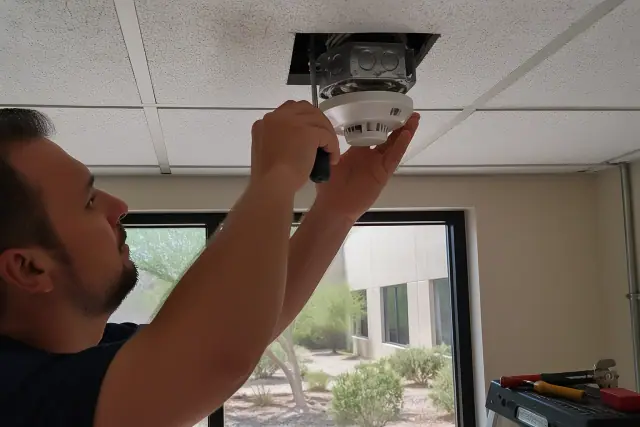
Technician installing a smoke detector on a commercial ceiling in Scottsdale, AZ.

We install systems ranging from a smoke-detector retrofit to a building-wide addressable system. Device count, panel features, notification appliances, and the property layout guide the scope, with permit and inspection coordination included in the installation process.

Explore Service

Commercial Fire Alarm Systems

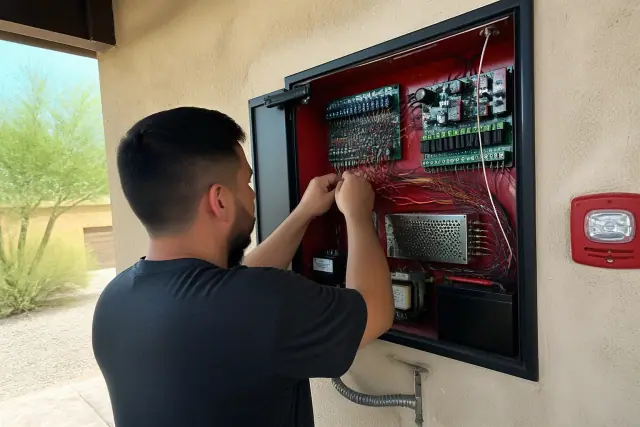
Technician wiring a fire alarm control panel in a Scottsdale, AZ building.

Commercial properties follow occupancy requirements under the International Fire Code and International Building Code as adopted locally. We design addressable systems for offices, hospitality properties, retail centers, and multi-tenant buildings, sizing initiating and notification circuits to the actual layout and occupancy.

Explore Service

Fire Alarm Inspection & Testing

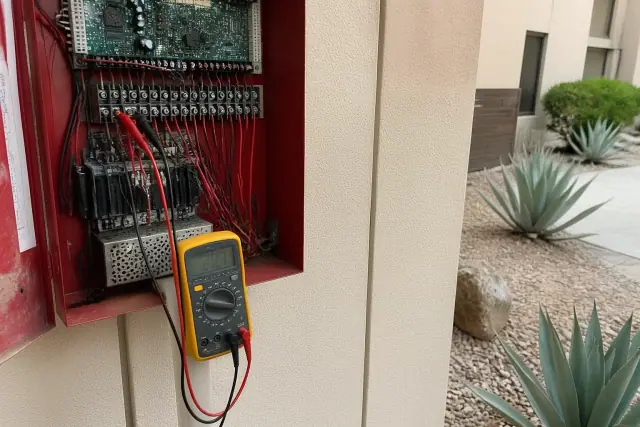
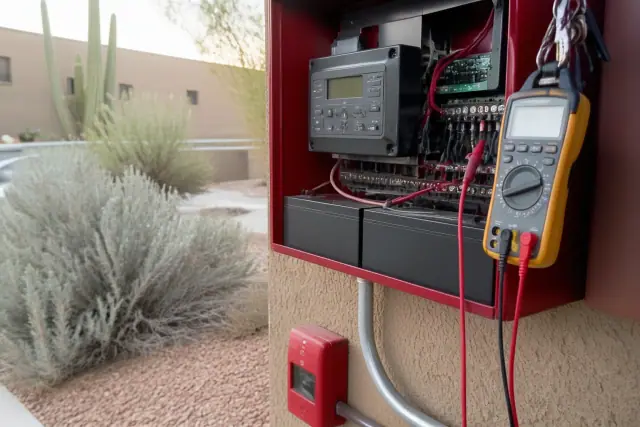
Multimeter probes testing a fire alarm terminal block at a commercial building in Scottsdale, AZ.

We test device function, panel status, circuit condition, and batteries on the schedules applicable under NFPA 25 and NFPA 72. Documentation is organized for fire marshal, annual certification, and property compliance records.

Explore Service

Fire Alarm Monitoring

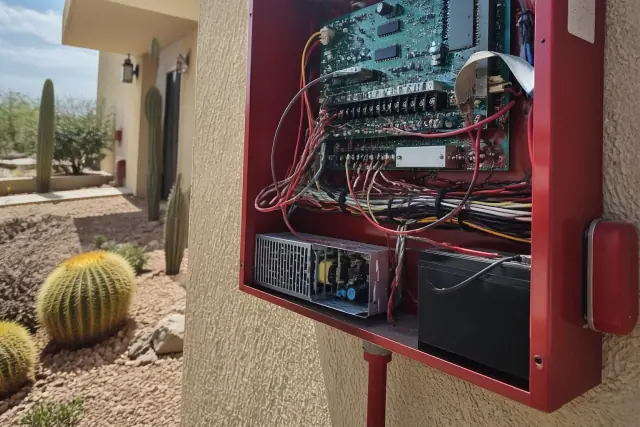
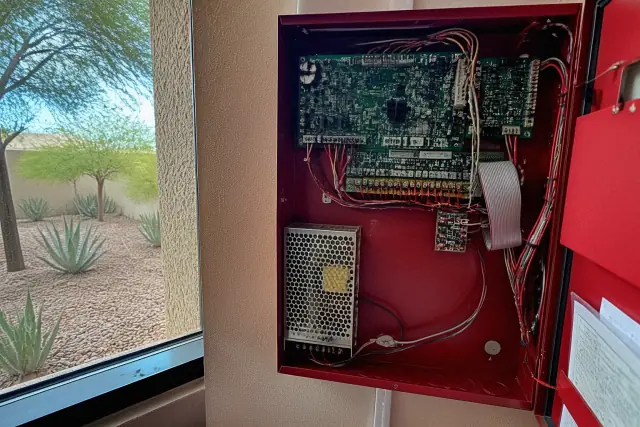
Interior of a wall-mounted fire alarm control panel with wiring in a Scottsdale, AZ building with desert landscaping.

A 24/7 monitored connection routes alarm signals to a UL-listed central station, which can notify emergency responders when a device activates. Reporting formats are configured to work with the building's monitoring setup.

Fire Alarm Repair & Troubleshooting

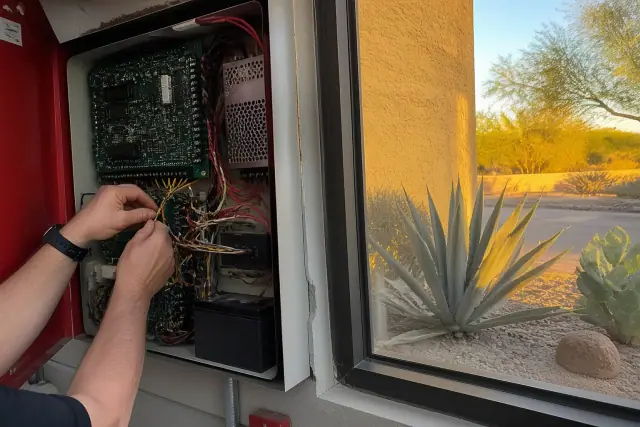
Technician repairing fire alarm system wiring inside a control panel in Scottsdale, AZ with desert landscaping outside.

We use panel history logs, circuit testing, and device-by-device inspection to trace ground faults, nuisance activations, dead zones, and trouble conditions. Targeted diagnosis helps determine whether a detector, wiring run, notification appliance, or control-board repair is appropriate.

Fire Alarm Maintenance

Technician using a multimeter to check a fire alarm terminal block at a Scottsdale, AZ property.

Maintenance plans account for occupancy type, system age, detector heads, batteries, wiring, and panel firmware. NIH-published smoke alarm research cited in the source found that functional rates of unmaintained alarms fall to roughly 33% by the ten-year mark, underscoring the value of routine attention.

Fire Alarm System Design

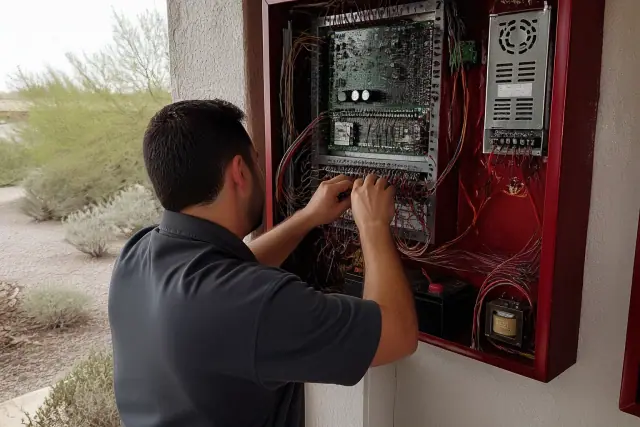
Technician wiring a fire alarm control panel cabinet on a stucco wall in Scottsdale, AZ.

Design starts with a walkthrough that considers airflow, ceiling height, occupant load, detector spacing, pull stations, and notification coverage under NFPA 72. Larger commercial projects can include shop drawings for permit submittal and coordination with architects, electrical contractors, and the general contractor.

Fire Alarm System Replacement & Upgrades

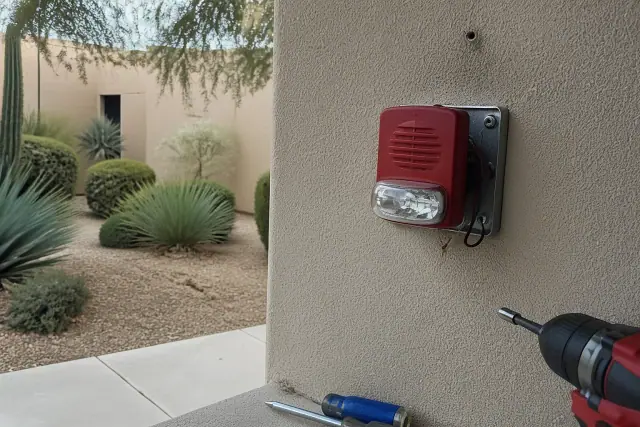
Technician installing a fire alarm horn-strobe device on a stucco wall at a job site in Scottsdale, AZ.

We assess whether an older conventional system can move to addressable technology or whether parts availability and code changes support full replacement. Modernization can include photoelectric detectors, notification appliances with current candela ratings, new wiring, and UL 864-listed panels.

Fire Alarm Panel Installation & Service

Technician wiring a fire alarm control panel inside a building in Scottsdale, AZ.

We install and program control panels from major UL 864-listed manufacturers, configuring zones, addressable points, initiating and notification circuits, and reporting formats around the building's needs. Service can also target individual panel boards, detectors, pull stations, and notification appliances.

Voice Evacuation & Mass Notification Systems

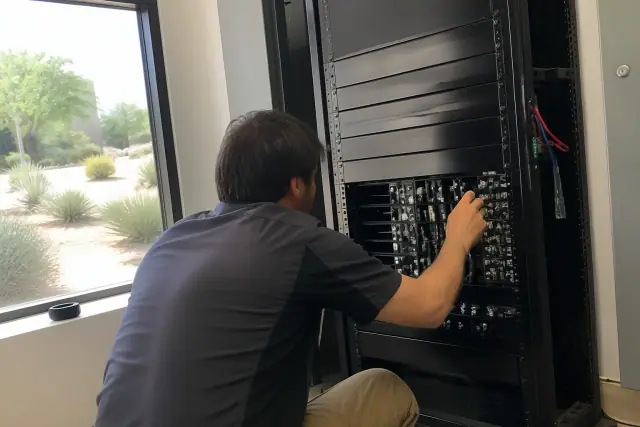
Technician inspecting fire alarm voice evacuation amplifier cards in a server rack in Scottsdale, AZ.

Larger commercial buildings, high-rises, and assembly occupancies may need voice evacuation instead of standard horn-strobe notification. We install speaker circuits for intelligible instructions and design coordinated mass-notification platforms with pre-recorded messages and live paging.

System Planning

How to Choose the Right Fire Alarm Service in Scottsdale

The right scope depends on the property, occupancy, existing panel, inspection status, and the symptoms or construction plans that prompted the call. These factors help distinguish a targeted repair from new design, installation, monitoring, maintenance, or replacement work.

Property Type and Occupancy

A single-family residence, retail center, office, hospitality property, high-rise, and multi-tenant building each presents different device, notification, and occupancy needs. Start with how the space is used and who must receive an alarm signal.

Conventional or Addressable Architecture

An existing conventional panel may support a focused repair, while larger or modernized properties can benefit from addressable points that identify device locations. Parts availability and code changes also affect whether an upgrade or replacement is practical.

Detection and Notification Coverage

Detector spacing, ceiling height, airflow, pull-station placement, speaker or horn-strobe coverage, and candela requirements shape the system layout. A walkthrough connects those technical details to the actual architecture.

Monitoring and Signal Routing

Properties left unoccupied after hours may need central-station monitoring and reporting formats compatible with the installed panel. The monitoring path should be planned alongside device programming rather than treated as an afterthought.

Inspection and Maintenance Needs

Panel status, batteries, device function, wiring condition, detector age, and documentation all influence the service plan. Occupancy type and system age help determine the applicable testing and maintenance schedule.

Repair or Replacement Scope

History logs and circuit tests can reveal whether a targeted device or wiring repair will restore normal operation. Unsupported panels, unavailable parts, broad wiring deterioration, or changed code requirements can make replacement the more sensible scope.

Scottsdale Fire Alarm Issues

Common Fire Alarm Problems in Scottsdale

Dust, summer heat, aging devices, and legacy infrastructure can expose weak points through false alarms, trouble signals, or failed components. NFPA research cited in the source found that the death rate per 1,000 reported home fires dropped roughly 60% between 2018 and 2022 when alarms operated as designed. Recognizing warning signs early supports reliable detection and a more focused service call.

Request Troubleshooting

Dust-Related Nuisance Activations

Dust-heavy monsoon conditions can contaminate a detector's sensing chamber and contribute to alarms with no apparent fire. Placement near kitchens can create similar nuisance activation patterns.

Heat and Conduit Wear

Scottsdale's summer heat can accelerate wear on exposed conduit, wiring, and detector components. Inspection helps separate environmental wear from a panel or programming issue.

Ground Faults and Trouble Signals

A panel locked in trouble mode may be reporting damaged wiring, a ground fault, a device issue, or another circuit condition. History logs and electrical testing narrow the source before parts are replaced.

Weak Batteries and Aging Detectors

Weak batteries and aging smoke or heat detector heads can undermine reliability or create recurring service alerts. Testing identifies devices that no longer perform as intended.

Dead Zones and Failed Devices

A dead zone can result from a wiring break, an offline addressable point, or a failed initiating or notification device. Device-by-device inspection verifies where communication or coverage stops.

Unsupported Legacy Panels

Older South Scottsdale and Old Town properties may still use conventional panels whose parts are no longer supported by the manufacturer. A system review can compare a limited upgrade with full modernization.

Why Choose Us

Why Choose Phoenix Fire Alarm Systems in Scottsdale?

Fire alarm work requires Arizona contractor licensing, familiarity with NFPA 72 and NFPA 101, and an understanding of Scottsdale's permit and inspection process. Our approach combines local coordination, platform-specific training, and methodical system diagnosis for residential and commercial properties.

Scottsdale Permit Coordination

We plan permit submittals around City of Scottsdale requirements and coordinate final acceptance testing with the Scottsdale Fire Department. Commercial shop drawings can also be coordinated with the project architect, electrical contractor, and general contractor.

Platform-Specific Technician Training

Technicians train on NICET-recognized procedures and manufacturer-specific programs, supporting work on addressable programming, panel reporting, initiating devices, and notification circuits.

Detailed Fault Diagnosis

Panel history logs, circuit testing, and device-by-device inspection guide repair decisions. That process helps isolate wiring, detector, pull-station, notification-appliance, and panel-board faults without defaulting to full replacement.

Clear Project Steps

Our Fire Alarm Installation Process in Scottsdale

The process moves from site conditions and system requirements to design, permitting, installation, programming, and final testing. Each step produces information needed for the next, keeping the property layout, occupancy, and inspection requirements connected.

01.

Walkthrough and Needs Review

We review the floor plan, occupancy, ceiling conditions, existing equipment, trouble history, and the reason for the project. This establishes whether the need is installation, repair, inspection, maintenance, monitoring, or replacement.

02.

System Design and Device Layout

Detector spacing, pull stations, initiating circuits, notification coverage, panel capacity, and monitoring requirements are mapped to the property. Commercial designs account for the locally adopted code and occupancy classification.

03.

Permit Drawings and Coordination

When the scope requires it, we prepare shop drawings for City of Scottsdale permit submittal and coordinate with architects, electrical contractors, and the general contractor.

04.

Installation and Programming

Technicians install devices, wiring, control panels, speaker or notification circuits, and interface modules, then configure zones, addressable points, and reporting formats.

05.

Inspection and Acceptance Testing

Device operation, panel status, batteries, monitoring signals, and notification functions are tested and documented. Final acceptance is coordinated with the fire department inspector when required.

06.

Documentation and Ongoing Service

We organize compliance records and explain the installed system, then match future inspection, testing, and maintenance needs to the occupancy type and system age.

Property Applications

Fire Alarm Applications for Scottsdale Properties

Case Study 1: Residential Retrofit: In an older home, a walkthrough can identify detector coverage inside every bedroom, outside sleeping areas, and on every level, then determine whether existing devices should be retained or updated.

Case Study 2: Commercial Tenant Improvement: An office, retail, or hospitality build-out can require revised initiating circuits, notification coverage, panel programming, and permit drawings that match the new occupancy and floor plan.

Case Study 3: High-Rise or Mixed-Use Property: A larger Scottsdale building may need addressable detection, voice evacuation, speaker intelligibility, live paging, and coordinated monitoring across multiple areas or structures.

Plan Your Project

Schedule a Fire Alarm
System
Consultation

Tell us about your Scottsdale property, current panel, trouble signals, or planned construction. We can review the site, identify the appropriate service scope, and provide a written estimate that explains permitting, equipment, installation, and final inspection work.

Scottsdale Fire Alarm Help

FAQs About Fire Alarm Services in Scottsdale, AZ

These answers cover pricing factors, installer qualifications, detector placement, monitoring, maintenance, repair, replacement, and service coverage. Exact requirements depend on the property's floor plan, occupancy, system type, and locally adopted code.

Call Our Fire Alarm Team

Costs vary with property size and system type. A basic residential system with several detectors and a control panel typically runs between $540 and $5,000. Professional labor generally runs $100 to $400 per hour depending on wiring and panel-programming complexity, while commercial pricing also depends on square footage, occupancy, device count, and voice-evacuation needs.

Beyond a basic residential smoke-detector swap, installation, replacement, and repair should be handled by a licensed fire alarm contractor or qualified fire alarm technician. Fire alarm systems have separate NFPA 72 design standards, panel-programming requirements, and local permit and inspection steps. An unqualified installation can create inspection and performance problems.

The residential baseline described in the source generally calls for a smoke detector inside every bedroom, immediately outside each sleeping area, and on every level of the home, including basements. Larger homes and additions may need more devices to maintain spacing and coverage. Commercial detector requirements instead depend on occupancy classification, square footage, and the approved design.

Nuisance activations can result from a detector too close to a kitchen, dust in the sensing chamber, a compromised device, or a wiring fault. A fire alarm technician can review the panel history, test circuits, and inspect devices to identify the cause. That diagnosis helps avoid replacing equipment that is still functional.

A conventional system organizes devices into zones, while an addressable system can identify individual programmed points. Addressable technology is often useful in larger or more complex properties where precise device information aids response and troubleshooting. The existing wiring, panel condition, parts availability, and property layout all affect upgrade decisions.

Inspection and testing can cover device function, control-panel status, battery condition, wiring or circuit performance, notification functions, and monitoring signals. The results are documented for fire marshal and property compliance records. The applicable scope and schedule depend on the system and occupancy under NFPA 25 and NFPA 72.

A monitored panel sends alarm signals to a UL-listed central station using the configured reporting format. When a device activates, the station can notify emergency responders even if no one is on site. Panel programming and signal testing confirm that the system communicates with the monitoring setup.

A repair may be appropriate when testing isolates a failed board, device, or wiring condition and compatible parts remain available. Replacement becomes more practical when the panel is unsupported, faults are widespread, parts cannot be sourced, or the existing architecture no longer fits current code and property needs. A walkthrough and system diagnosis provide the basis for that decision.

Larger commercial buildings, high-rises, assembly occupancies, and some mixed-use properties may require voice evacuation rather than standard horn-strobe notification. The design uses speaker circuits and intelligibility planning so occupants can receive clear instructions. Mass-notification systems can also coordinate pre-recorded messages and live paging across multiple structures.

Design begins with a walkthrough of airflow, ceiling height, occupant load, floor-plan conditions, and existing equipment. Detector spacing, pull stations, initiating circuits, notification coverage, panel configuration, and monitoring needs are then laid out under NFPA 72. Larger commercial scopes can include coordinated shop drawings for permit submittal.

Dust can enter detector chambers and contribute to nuisance activations, while summer heat can accelerate wear on exposed conduit, wiring, and detector components. Panel logs, circuit tests, and device inspection help distinguish environmental wear from placement, programming, or equipment faults. Routine maintenance can catch those conditions before they create persistent trouble signals.

Maintenance intervals should match the occupancy type, system age, equipment, and the inspection and testing schedule that applies under NFPA standards. Service can include detectors, batteries, wiring condition, panel firmware, and documentation. The source cites research showing functional rates of unmaintained alarms falling to roughly 33% by the ten-year mark, so maintenance should not be treated as a one-time installation task.

Panel installation includes selecting a UL 864-listed platform suited to the building, connecting initiating and notification circuits, and configuring zones or addressable points. Programming also establishes reporting formats for the monitoring setup. Testing then confirms panel status, device communication, notification functions, and signal routing.

Yes, when a sprinkler or suppression system is installed by the appropriate trade, the fire alarm can use monitoring points and interface modules to report an activation. The alarm design must coordinate those interfaces with the panel, notification functions, and approved building plans. Fire alarm integration does not replace the separate suppression-system scope.

Coverage extends through Old Town, South Scottsdale, DC Ranch, Gainey Ranch, McCormick Ranch, Grayhawk, Kierland, the Shea corridor, and communities toward Carefree and Cave Creek. The service area also includes the greater Maricopa County region named in the source, including Phoenix, Paradise Valley, and Fountain Hills. Property needs range from older residential systems to new commercial construction near Scottsdale Fashion Square, Hayden Road, Loop 101, and the McDowell Sonoran Preserve.