Proudly serving Phoenix, Mesa, Glendale, Scottsdale, Tempe, Chandler & surrounding areasCall or Text 24/7: 602-449-8143
Aerial view of residential neighborhoods, desert washes, and low-rise buildings in Phoenix, AZ.

Fire Alarm System Installation, Troubleshooting & Monitoring in Surprise, AZ

Phoenix Fire Alarm Systems installs, designs, inspects, tests, monitors, repairs, and maintains fire alarm systems throughout Surprise, Arizona. We serve homeowners, property managers, and commercial building owners with conventional and addressable systems, panel service, system upgrades, and voice evacuation or mass notification solutions. Our work covers new construction, tenant improvements, retrofits, and existing equipment that needs reliable troubleshooting. Each project is matched to the building's occupancy, size, and fire protection needs.

Surprise properties face summer temperatures that regularly climb past 110 degrees, along with dust storms and construction particulate that can stress wiring, enclosures, and detector sensitivity. New buildings need code-compliant plans and acceptance testing before occupancy, while established properties may need aging panels and detectors reviewed for replacement. Our process accounts for desert exposure, the city's plan-review requirements, and the documentation needed for inspection. That local context helps owners choose a system that suits the property rather than relying on a one-size-fits-all design.

From Marley Park and Surprise Farms to Asante, Prasada, and the Bell Road and Loop 303 corridors, we plan fire alarm work around the property's layout, use, and stage of construction. Call to discuss a new installation, inspection, repair, monitoring connection, or system upgrade.

★ ★ ★ ★ ★4.9/5 Average Rating - 20+ Years of Experience - Surprise Fire Alarm Systems Specialists - Residential & Commercial
Fire Alarm Services

Fire Alarm Services Available in Surprise, AZ

Surprise's population has grown nearly fivefold since 2000, leaving a mix of new construction, tenant buildouts, and established properties with aging equipment. Our services cover the complete system lifecycle, from shop drawings and permit coordination through installation, programming, testing, maintenance, monitoring, repair, and replacement. Select the service that matches your property's current need, whether you are opening a new space, correcting a trouble condition, or planning an upgrade. For a portfolio with property in Goodyear, AZ , that location page outlines the nearby coverage available there.

Fire Alarm System Installation

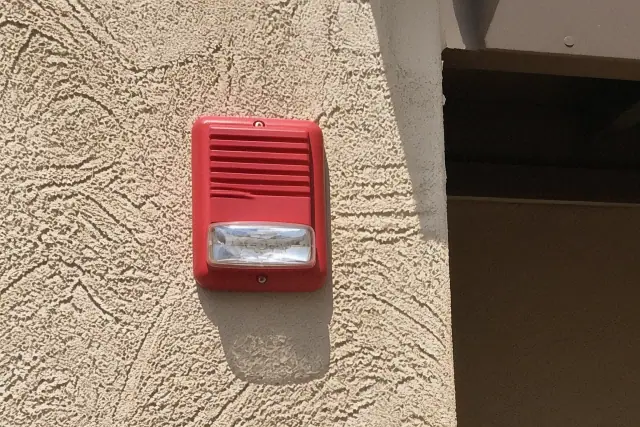
Fire alarm horn-strobe device being installed on a stucco wall at a residential property in Surprise, AZ.

We install fire alarm systems for new construction, tenant improvements, and retrofits, coordinating rough-in wiring, device mounting, panel programming, and final acceptance testing. Designs are matched to occupancy classification, square footage, ceiling height, and the required notification approach.

Explore Service

Commercial Fire Alarm Systems

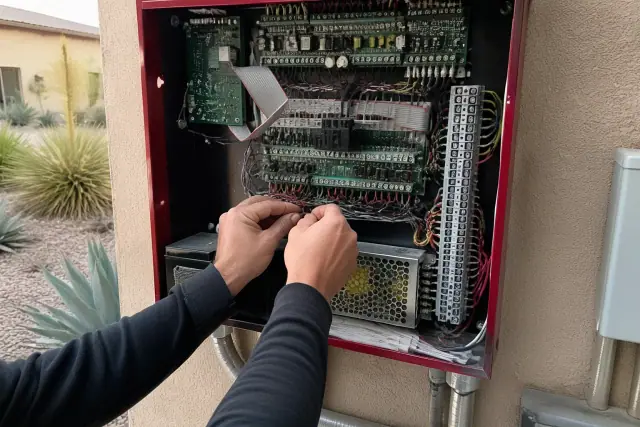
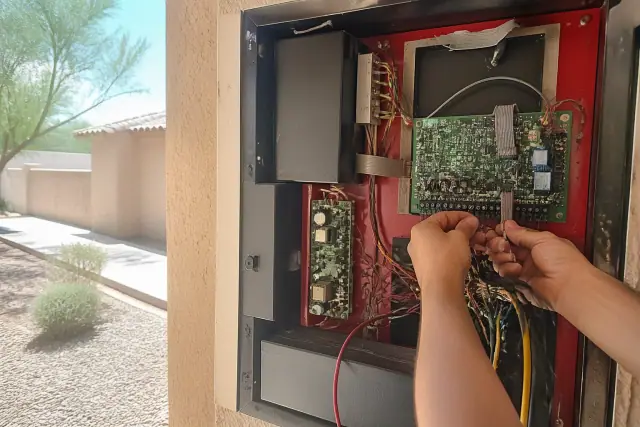
Technician hands wiring a commercial fire alarm control panel in Surprise, AZ.

Commercial work includes office buildings, retail centers, warehouses, manufacturing and distribution facilities, and multi-family properties. Large open spaces and high ceilings along the Loop 303 corridor may call for specialized detector spacing or beam detection, while tenant suites often need systems coordinated with the larger building.

Explore Service

Fire Alarm Inspection & Testing

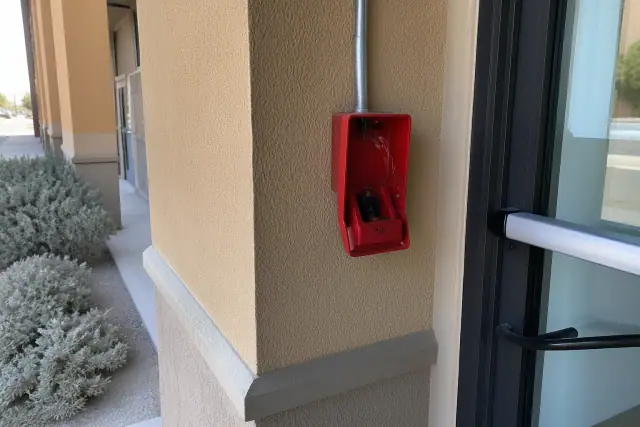
Red manual fire alarm pull station with exposed wiring on a stucco wall at a job site in Surprise, AZ.

Inspection and testing cover initiating devices, notification appliances, control panels, batteries, and supervisory circuits. Technicians document each device tested, identify failures, and produce the records needed by the property, insurance carrier, and local fire marshal.

Explore Service

Fire Alarm Monitoring

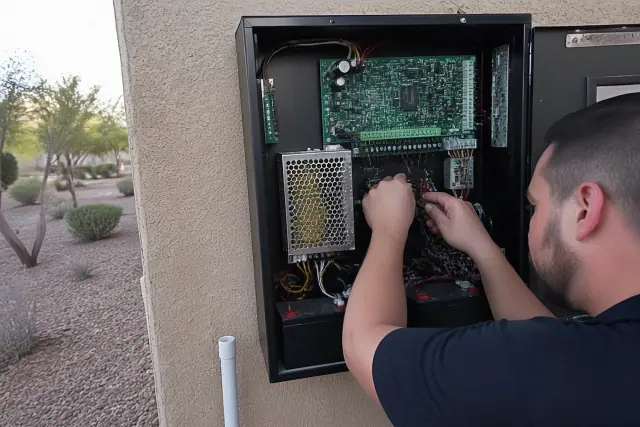
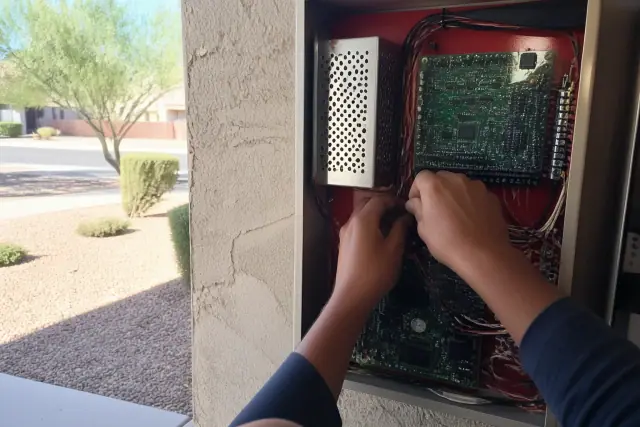
Technician wiring a fire alarm control panel inside a stucco building in Surprise, AZ.

Monitoring connects the panel to a central station so smoke, heat, or pull-station activations can be transmitted even when no one is on site. We set up monitoring for new installations and can evaluate an existing panel whose account has lapsed, including communication testing to confirm signal transmission.

Fire Alarm Repair & Troubleshooting

Technician repairing fire alarm system circuits inside a wall-mounted panel in Surprise, AZ.

We troubleshoot ground faults, open circuits, corroded terminals, failed detector heads, trouble lights, and unknown fault states. Technicians evaluate the cause and use replacement detectors, modules, or panel components when the equipment remains serviceable.

Fire Alarm Maintenance

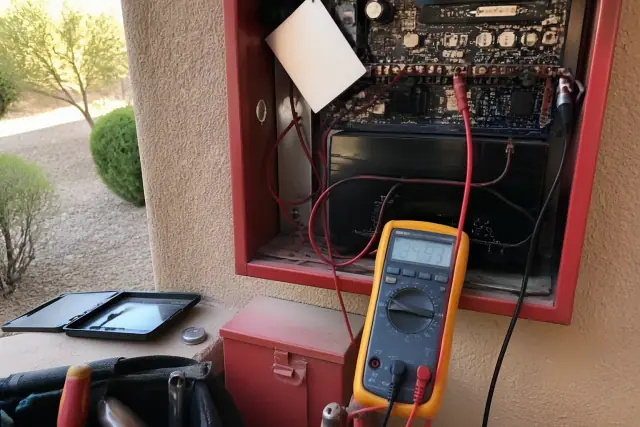
Technician using a multimeter to test a fire alarm system terminal block at a jobsite in Surprise, AZ.

Preventive visits can combine inspection, testing, battery replacement, device cleaning, and detector sensitivity review on a predictable schedule. Cleaning is especially important after haboobs or nearby construction because particulate inside a detector chamber can contribute to false alarms or reduced sensitivity.

Fire Alarm System Design

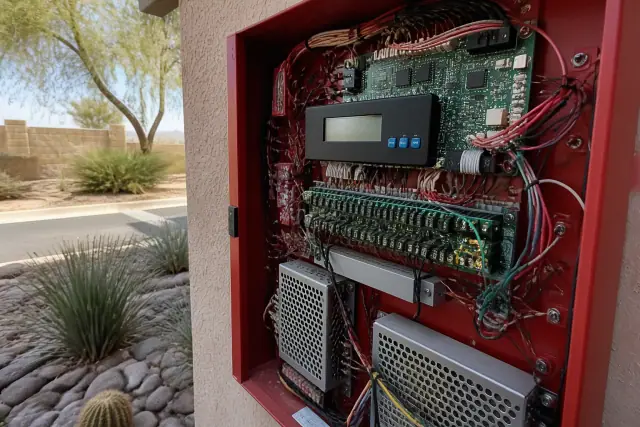
Interior of a fire alarm control panel cabinet with logic boards against a desert landscape wall in Surprise, AZ.

System design begins with architectural drawings and considers occupancy, square footage, ceiling height, HVAC airflow, and local code requirements. The plan-review package can include shop drawings, battery calculations, and voltage-drop calculations for the Surprise Building Safety Division.

Fire Alarm System Replacement & Upgrades

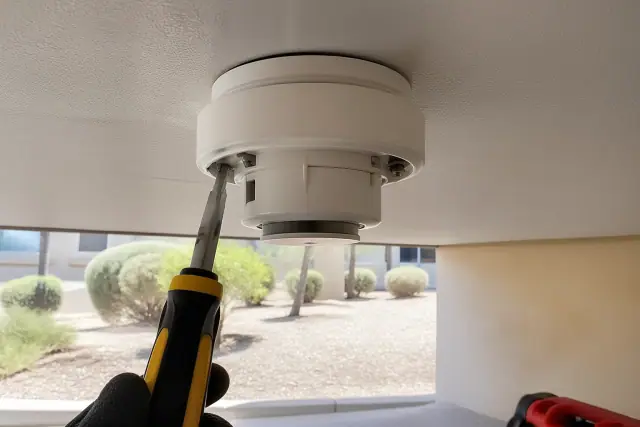
Technician installing a smoke detector on a ceiling junction box at a jobsite in Surprise, AZ.

We evaluate whether a targeted upgrade or full replacement makes sense based on wiring condition, panel age, device compatibility, and parts availability. Options can include converting a conventional system to addressable technology, adding voice evacuation, or replacing an obsolete control panel.

Fire Alarm Panel Installation & Service

Technician hands wiring a fire alarm control panel cabinet in Surprise, AZ.

Panel installation includes zone and addressable-point programming, coordination with the building layout, and dialer communication setup for monitoring. We also service panels that show trouble conditions and replace units that have reached end of life or lost manufacturer parts support.

Voice Evacuation & Mass Notification Systems

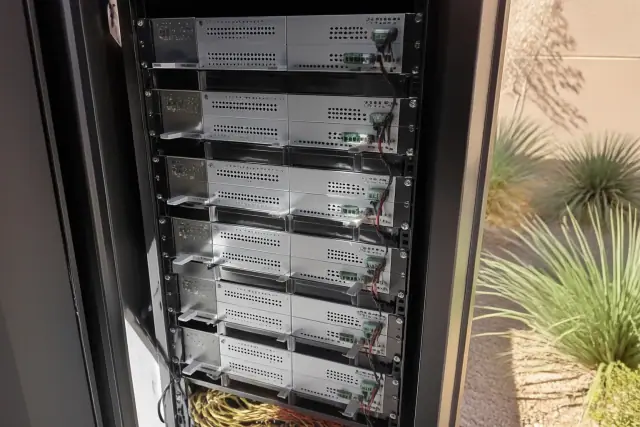
Voice evacuation amplifier rack with modular cards at a jobsite in Surprise, AZ.

Schools, hospitals, hotels, and multi-story offices may need voice evacuation or mass notification rather than horn-strobe notification alone. These emergency communication systems can provide prerecorded or live instructions and integrate with the fire alarm control panel for complex or phased evacuation plans.

System Selection

How to Choose the Right Fire Alarm System

The right approach depends on the building's occupancy, size, ceiling conditions, existing infrastructure, notification needs, and monitoring requirements. A site walk and design review help determine whether a conventional or addressable platform, targeted upgrade, or complete replacement best fits the project. The six factors below shape that decision before plans and equipment are finalized.

Occupancy and Building Scale

An office suite, hospital, hotel, school, warehouse, and multi-family property do not present the same detection or evacuation needs. Occupancy classification, square footage, ceiling height, open bays, and phased evacuation requirements determine device coverage and system complexity.

Conventional or Addressable

Conventional systems group devices into shared zones, while addressable systems identify the exact initiating device at the panel. Addressable technology is often better suited to larger, more complex buildings, while the design review determines what fits the actual occupancy and budget.

Notification and Evacuation Needs

Horn-strobe notification may fit some properties, but larger or more complex occupancies can require voice evacuation and mass notification. The decision should account for occupant movement, evacuation routes, building height, and whether prerecorded or live instructions are needed.

Desert Environment

Exterior devices, rooftop conduit, attic wiring routes, and panels in unconditioned rooms can face sustained desert heat. Equipment ratings, enclosure placement, ventilation considerations, and detector cleaning schedules should reflect elevated temperatures and regular dust exposure.

Monitoring Requirements

The building's occupancy and local code determine whether central-station monitoring is required. For monitored systems, the design must include compatible panel communications and periodic transmission testing so alarm and supervisory signals reach the station.

Existing System Condition

For retrofits, the first question is whether the existing wiring, devices, and panel remain compatible and supportable. Smoke detectors approaching the 10-year review point and panels with discontinued parts may favor replacement, while sound infrastructure can sometimes support a targeted upgrade.

Surprise System Issues

Common Fire Alarm Problems in Surprise Properties

Fire alarm trouble conditions can come from wiring faults, dirty detectors, environmental exposure, aging components, or inactive communications. These issues can reduce protection, create nuisance alarms, or lead to inspection deficiencies, so a chirp, trouble light, supervisory signal, or unexplained fault should be evaluated rather than ignored.

Request System Inspection

Electrical Ground Faults

Damaged wiring, loose connections, and compromised insulation can create ground faults or open circuits that leave part of a system unable to report normally. Troubleshooting traces the affected circuit, tests continuity, and isolates the failed device or connection.

Dust-Contaminated Detectors

Haboobs and construction dust can enter smoke detector chambers, contribute to nuisance alarms, or reduce sensitivity. Cleaning and recalibration during scheduled maintenance help keep devices responsive without treating every recurring alarm as a panel problem.

Heat-Stressed Components

Direct sun, heat-soaked attics, rooftops, and unconditioned mechanical rooms can expose devices, conduit, wiring insulation, and enclosures to high temperatures. Equipment ratings, placement, and ventilation considerations matter in Surprise's climate.

Corroded Terminals

Seasonal humidity swings can contribute to corrosion at terminals and connections, creating intermittent faults that are difficult to diagnose from the panel display alone. A service visit checks wiring terminations and affected modules before replacing larger system components.

Obsolete Panels and Parts

Older panels may remain operational after manufacturers stop supporting their parts, making repairs slower or impractical. Retail centers built in the late 1990s and early 2000s are among the Surprise properties where replacement planning may be appropriate.

Trouble Signals or Lost Monitoring

A trouble light, persistent chirp, unknown fault, or failed communication test can signal that the building's protection is impaired or no longer reaching the monitoring station. The cause should be confirmed promptly and the system retested after correction.

Local Fire Alarm Expertise

Why Choose Phoenix Fire Alarm Systems in Surprise?

Fire alarm projects require more than mounting devices: design documents, permits, programming, testing, and final records all have to align. Phoenix Fire Alarm Systems combines Surprise permitting familiarity, Arizona-licensed fire alarm work, certified technicians, and desert-climate planning across installation, inspection, monitoring, maintenance, and repair services.

Surprise Permit Coordination

We prepare permit documents, coordinate plan review with the Surprise Building Safety Division, and schedule the required final inspection. Familiarity with the Surprise Fire-Medical Department's process helps keep the design, calculations, and field work aligned with local review expectations.

Licensed and Certified Technicians

Phoenix Fire Alarm Systems operates with the Arizona contractor licensing required for this work, and its technicians maintain relevant fire alarm certifications and factory training on the panel brands they service. That technical background supports installation, programming, testing, and troubleshooting across Maricopa County.

Complete Testing and Records

Every installation moves through device-by-device acceptance testing before closeout. Customers receive as-built drawings, a battery calculation sheet, and an acceptance test report, while inspection visits document tested devices and identified deficiencies.

Project Process

Our Fire Alarm Installation Process in Surprise

Project timing depends on building size, system complexity, permit review, and inspection scheduling. Work begins with the property and design requirements, then moves through city review, field installation, programming, acceptance testing, and documented closeout. The six steps below show how the scope advances from initial evaluation to an active system.

01.

Site Walk and System Review

We inspect the property, review the intended occupancy, and discuss new construction, retrofit, repair, monitoring, or upgrade goals. Existing systems are checked for wiring condition, device compatibility, panel support, and active trouble signals.

02.

Design and Calculations

The layout is developed from field conditions and architectural drawings, with device selection based on square footage, ceiling height, HVAC airflow, and notification needs. This stage also establishes the conventional or addressable approach and required calculations.

03.

Permit and Plan Review

Shop drawings, battery calculations, voltage-drop calculations, and supporting documents are submitted to the Surprise Building Safety Division for plan review. Installation is scheduled after the required permit approval is in place.

04.

Rough-In and Device Installation

Crews install rough-in wiring, mount initiating and notification devices, and place the control panel according to the approved design. Coordination with electrical and general contractors keeps the alarm scope aligned with the wider construction schedule.

05.

Panel Programming and Monitoring

Zones and addressable points are programmed to match the building layout, and compatible communication paths are connected to the monitoring station when monitoring is part of the project. Each function is checked before the acceptance test.

06.

Acceptance Testing and Closeout

Every device is verified during acceptance testing with the fire marshal or third-party inspector as required. After final inspection and confirmed monitoring, the closeout package includes as-built drawings, battery calculations, and the acceptance test report.

Property Planning Examples

Fire Alarm Planning for Distinct Properties

Case Study 1: Warehouse and industrial buildings: High ceilings and open bays along the Loop 303 corridor can affect detector spacing and may make beam detection relevant to the design.

Case Study 2: Retail and office spaces: Tenant improvements need device layouts, panel programming, and inspection documents coordinated with the property's occupancy and construction schedule.

Case Study 3: Older commercial properties: Buildings with conventional wiring or obsolete panels can be evaluated for a targeted addressable upgrade or a full replacement based on condition and parts support.

Plan Your Project

Schedule a Fire Alarm
System
Consultation

Discuss your Surprise property, building use, existing equipment, and project schedule with Phoenix Fire Alarm Systems. After a site walk, we can outline the appropriate installation, inspection, repair, monitoring, maintenance, or upgrade scope and provide a detailed proposal that covers equipment, labor, permitting, and final testing.

Surprise Fire Alarm Help

Fire Alarm FAQs for Surprise, AZ

These answers cover the costs, timelines, system types, code steps, inspection needs, monitoring, maintenance, and upgrade decisions described for Surprise properties. For building-specific requirements, a site review is the safest way to account for occupancy, layout, existing equipment, and local plan review.

Call About Your System

Cost depends on building size, occupancy, device count, and whether the design is conventional or addressable. Small commercial projects may start in the low thousands, while larger systems with voice evacuation and extensive device coverage can reach the tens of thousands; trade labor commonly ranges from $100 to $400 per hour depending on scope and equipment. A site walk allows the proposal to separate equipment, labor, permitting, and final testing.

A straightforward small retail or office installation often takes two to five business days after permits are approved. Larger commercial buildings with addressable systems, voice evacuation, or complex wiring can take several weeks from rough-in through final acceptance testing. Permit processing and final-inspection scheduling also affect the overall calendar.

The two primary categories are conventional and addressable systems. A conventional system reports the shared zone where an alarm started, while an addressable system identifies the exact initiating device. The right choice depends on occupancy, building complexity, troubleshooting needs, and budget.

Requirements depend on occupancy and the fire and building codes adopted by the City of Surprise. New residential construction, commercial buildings, and multi-family properties generally require hardwired, interconnected detection under the applicable code, but there is not one blanket statewide mandate for every existing structure. A property review can identify which rules apply to the specific building.

NFPA 72 and locally adopted fire code require inspection and testing at least annually for most commercial fire alarm systems. Some components, occupancies, and monitored communications need more frequent checks. Inspection records should remain available for fire-marshal review.

Yes. A new installation or significant modification requires permit submission and plan review through the Surprise Building Safety Division before work begins. The system also needs a final inspection before it is placed into service.

The inspector identifies the deficiencies that must be corrected before re-inspection. Common issues include detector spacing, voltage-drop calculations, missing documentation, or devices that do not activate during testing. After corrections, the affected functions are retested and the follow-up inspection is coordinated.

Often, if the existing wiring remains sound and compatible with the proposed equipment. A targeted upgrade may replace the panel, convert the system to addressable technology, or add voice evacuation, while panels more than 10 to 15 years old may lack manufacturer parts support and favor replacement. The site review compares both options with their cost and compliance implications.

A monitored panel transmits alarm, supervisory, or trouble signals to a central station around the clock. When smoke, heat, or a manual pull station activates, the signal can be processed even if no one is on site. The communication path should also be tested periodically to confirm transmission.

Direct sun, unconditioned mechanical rooms, heat-soaked attic routes, haboobs, and construction dust can stress wiring insulation, enclosures, and detector chambers. Equipment selection and placement should account for rated conditions, while cleaning and sensitivity checks help manage particulate buildup. Recurring nuisance alarms may be a maintenance issue rather than a reason to ignore the system.

A maintenance plan can combine inspection, device testing, battery replacement, detector cleaning, sensitivity review, and monitored-signal checks. The exact schedule depends on the system, occupancy, component requirements, and environmental exposure. Documented maintenance can also make annual inspection deficiencies easier to address.

Schools, hospitals, hotels, multi-story offices, and other larger or complex occupancies may require voice communication instead of horn-strobe notification alone. The system can deliver prerecorded or live instructions and support phased evacuation. The need is determined during design based on occupancy and applicable NFPA 72 requirements.

Do not ignore a chirp, trouble light, unknown fault, or communication failure because it may indicate an impaired circuit, device, battery, or monitoring path. A technician can read the panel condition, trace the affected circuit, correct the cause, and retest the system. The right repair depends on whether the issue is wiring, a field device, panel hardware, or communications.

Coverage inside Surprise includes Marley Park, Surprise Farms, Sun Village, Asante, Prasada, Greer Ranch, the Original Town Site, and commercial corridors along Bell Road, Waddell Road, Litchfield Road, Grand Avenue, and Loop 303. Nearby service communities named in the draft include Sun City West, Sun City, El Mirage, Youngtown, Peoria, and Buckeye. Commercial projects can also be handled across Maricopa County.

The design package can include shop drawings, battery calculations, and voltage-drop calculations for permit review. After acceptance testing, the customer receives as-built drawings, a battery calculation sheet, and the acceptance test report. Inspection visits separately document the devices tested and any deficiencies found.