Proudly serving Phoenix, Mesa, Glendale, Scottsdale, Tempe, Chandler & surrounding areasCall or Text 24/7: 602-449-8143
Aerial view of residential neighborhoods, desert washes, and low-rise buildings in Phoenix, AZ.

Fire Alarm Monitoring Services for Commercial & Residential Panels in Phoenix, AZ

Phoenix Fire Alarm Systems provides fire alarm monitoring for residential and commercial properties throughout Phoenix. We connect addressable and conventional panels to UL 827-certified central stations for continuous alarm, supervisory, and trouble-signal response. Our work also includes fire alarm installation, inspection and testing, repair, and preventive maintenance. Each recommendation is based on the building's occupancy, layout, existing equipment, and communication needs.

Phoenix summers can push building temperatures past 115 degrees, while monsoon dust and power disruptions stress panels, batteries, detectors, and communication paths. A local horn only warns people who are there to hear it; professional monitoring sends signals to a staffed central station. Our technicians are trained to NFPA 72 requirements, hold NICET-recognized certifications, and work with the City of Phoenix Fire Department permit and inspection process. A site assessment lets us evaluate the property before recommending components or a monitoring connection.

Cellular and IP communicators can replace aging landline paths, and compatible existing panels can often be connected without replacing the entire system.

Phoenix Fire Alarm Systems provides fire alarm monitoring in Phoenix, Scottsdale, Tempe, Mesa, Chandler, Glendale, and the greater Phoenix metro area.

★ ★ ★ ★ ★4.9/5 Average Rating · 20+ Years of Experience · Thousands of Customers Helped · Licensed & Insured · Residential & Commercial

Fire Alarm Monitoring Options & Benefits

What Is Fire Alarm Monitoring?

A monitored fire alarm detects smoke or heat, operates the building's local horns and strobes, and transmits the event to a staffed central station. That external connection distinguishes monitoring from a standalone system that can only alert people inside the property.

The station receives alarm, supervisory, and trouble signals, logs each transmission, and follows the configured verification, dispatch, and emergency-contact sequence. This creates a documented record that can support inspections, insurance audits, and lease requirements.

Commercial and residential systems can report through cellular or IP communicators instead of copper landlines. The correct connection depends on the existing panel, number of monitored points, property use, and code requirements.

Benefits of Professional Fire Alarm Monitoring

Professional monitoring adds an active reporting and response layer to the detection equipment already protecting a building. It keeps the signal path watched when the property is occupied, closed, or unattended.

  • 24/7 receipt of alarm, supervisory, and trouble signals
  • Direct contact with Phoenix Fire Department dispatch for genuine alarms
  • Notification of designated property contacts in the configured call sequence
  • Enhanced call verification that helps reduce false dispatches
  • Transmission logs for code, insurance, and lease documentation
  • Consistent signal handling on nights, weekends, and holidays
  • Cellular or IP reporting for properties without reliable landlines
  • Coverage for warehouses, storage facilities, and vacant commercial space
Monitoring Services

Phoenix Fire Alarm Monitoring Services

Monitoring works best when the panel, communicator, central station connection, testing, and maintenance are treated as one coordinated system. We assess each layer and configure the service around the property's equipment and operating needs.

Continuous Signal Monitoring

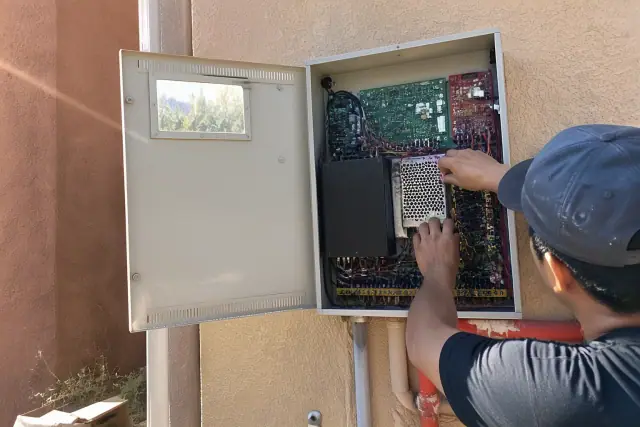
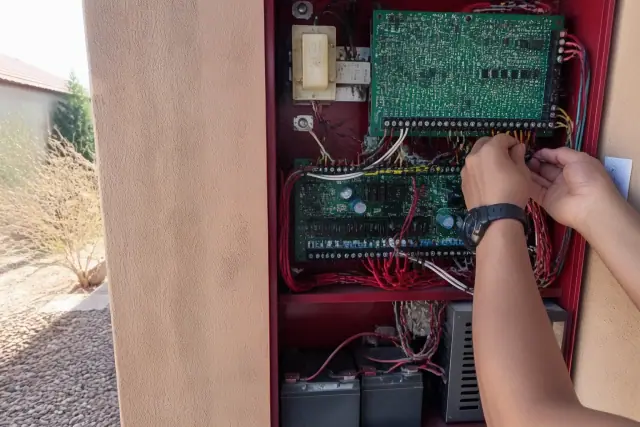
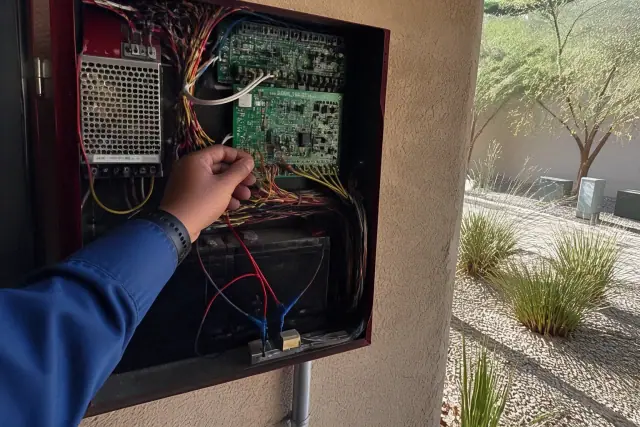
Technician wiring a fire alarm control panel cabinet on a stucco wall in Phoenix, AZ.

The central station receives and logs alarm, supervisory, and trouble transmissions every hour of every day. Nights, weekends, and holidays receive the same monitoring coverage as normal business hours.

Request Estimate

Alarm Dispatch and Contact Notification

Technician wiring complex circuits inside a fire alarm control panel cabinet in Phoenix, AZ.

When a genuine alarm signal arrives, monitoring personnel contact Phoenix Fire Department dispatch and notify the designated emergency contacts in the configured sequence. This removes the need to depend on someone at the property hearing a local alarm and placing the call.

Request Estimate

Enhanced Call Verification

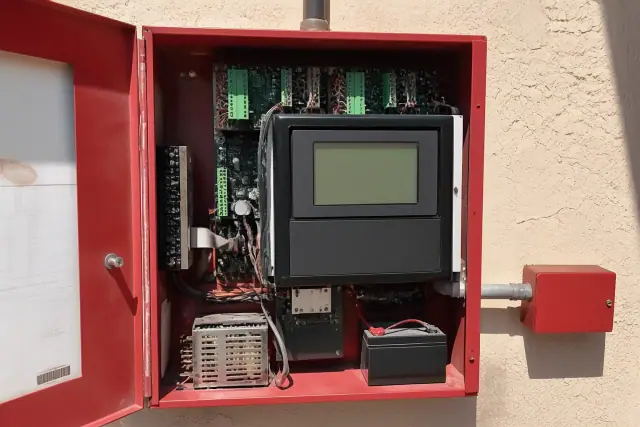
Fire alarm control panel installed on a stucco wall at a job site in Phoenix, AZ.

Verification procedures use the property and keyholder call list before escalation when the signal protocol calls for it. The process helps reduce unnecessary dispatches under the City of Phoenix false alarm ordinance while preserving a defined response path.

Request Estimate

Cellular and IP Communicator Upgrades

Technician wiring a fire alarm communicator inside a control panel cabinet in Phoenix, AZ.

We transition compatible monitored systems away from copper landlines to cellular or IP-based communicators. The upgrade gives warehouses, storage facilities, vacant buildings, and other unattended locations a modern path to the central station.

Request Estimate

Inspection, Testing, and Reporting

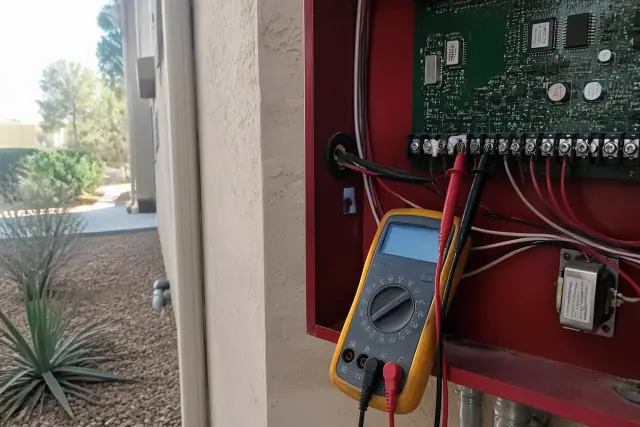
Technician using a multimeter to test a fire alarm terminal block at a building in Phoenix, AZ.

Functional testing confirms each initiating device, notification appliance, and monitoring connection operates as intended. We provide NFPA 72-compliant inspection reports that document the visit for fire marshal review, insurance audits, and lease compliance.

Request Estimate

Preventive Maintenance Plans

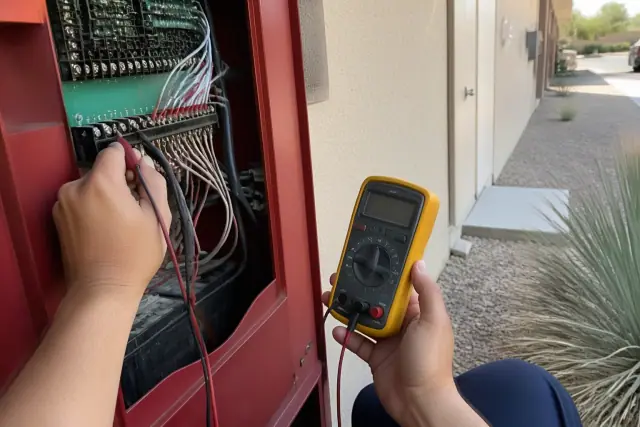
Technician using a multimeter to check a fire alarm terminal block at a commercial building in Phoenix, AZ.

Quarterly maintenance visits can catch battery degradation, dust in detector chambers, and connection wear before they cause trouble signals or false alarms. Proper upkeep supports a fire alarm system's typical 15-25 year working life, while panel-history tracking helps identify recurring faults.

Request Estimate
Monitoring Configurations

Types of Fire Alarm Monitoring Configurations

The right monitoring configuration depends on whether the property is residential or commercial, how the panel identifies devices, and which building-wide functions must respond to an alarm. We work with conventional, addressable, multi-zone, and voice evacuation systems.

Technician wiring a commercial fire alarm control panel in Phoenix, AZ.

Commercial Multi-Zone Monitoring

Commercial properties need coverage matched to occupancy and building use. Multi-zone monitoring organizes signals across tenant spaces, floors, or facility areas so an event can be located and acted on with less confusion.

  • Addressable panels can identify an alarm down to the individual device
  • Zone information supports properties with dozens of separate tenant spaces
  • Integration can coordinate HVAC shutdown, elevator recall, and access control
  • Design reflects occupancy classification, ceiling height, and occupant load
  • UL-listed initiating devices report through the configured central station path
Request Estimate
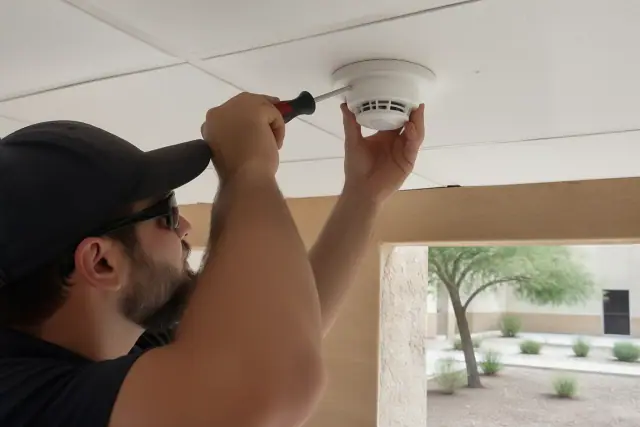
Technician installing a smoke detector on a ceiling junction box at a jobsite in Phoenix, AZ.

Residential Fire Alarm Monitoring

Residential monitoring adds automatic central station reporting to the home's detection and notification equipment. It provides an external response path when occupants are asleep, away, or unable to act on a phone alert.

  • Smoke and heat detectors initiate the alarm signal
  • Local horns and strobes warn people inside the property
  • A cellular or IP communicator sends the event off-site
  • The call sequence can include designated emergency contacts
  • Professional monitoring does not depend on the owner seeing a phone alert
Request Estimate
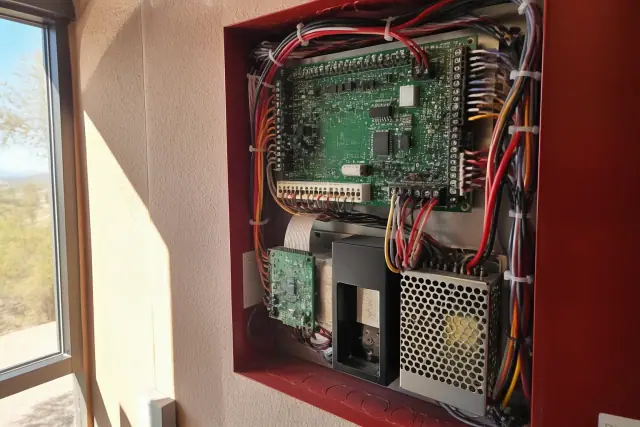
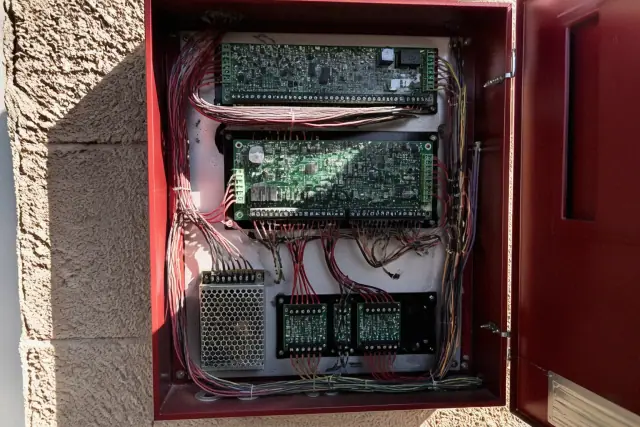
Interior of a wall-mounted fire alarm control panel with logic boards and cabling in Phoenix, AZ.

Addressable Panel Monitoring

Addressable systems identify the exact initiating device instead of reporting only a broad zone. That detail can shorten troubleshooting and help building personnel and responders understand where the event began.

  • Individual device identification for alarms and faults
  • Panel event logs that support precise diagnostics
  • Spare address and zone capacity for planned expansion
  • Integration with building automation response sequences
  • Cellular or IP communication to the central station
Request Estimate
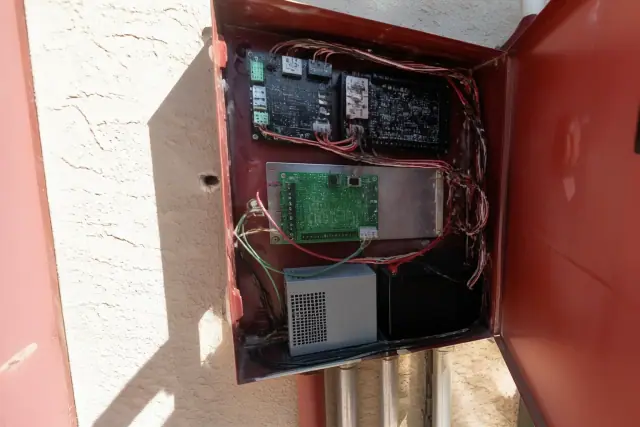
Technician wiring a fire alarm control panel on a stucco wall in Phoenix, AZ.

Conventional Panel Monitoring

Conventional panels report events by zone rather than by individual device. Many Phoenix buildings still use panels installed during the 1990s and 2000s, so compatibility, parts availability, and communicator options must be checked before changing the monitoring path.

  • Signals identify a broad circuit or zone
  • Legacy panel condition and manufacturer support are evaluated
  • Unavailable replacement parts can make modernization necessary
  • Compatible existing panels can often accept a new communicator
  • Planned addressable upgrades can reduce future troubleshooting time
Request Estimate
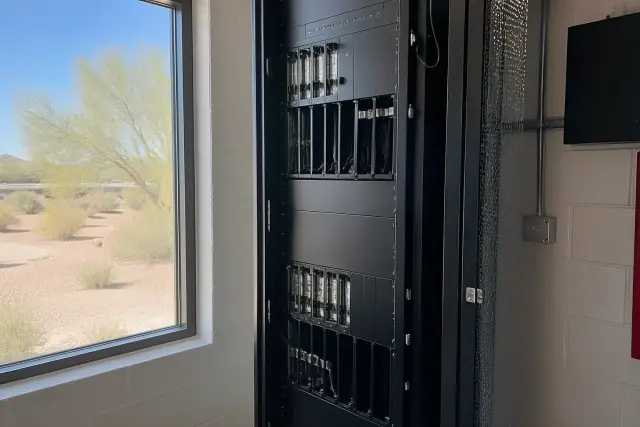
Technician inspecting a voice evacuation amplifier rack in a commercial utility room in Phoenix, AZ.

Voice Evacuation and Mass Notification

High-rises, schools, and assembly occupancies may use monitored voice evacuation and mass notification systems for more specific instructions during an event. The design is matched to occupancy thresholds, building layout, and the required alarm response.

  • Live or pre-recorded emergency instructions
  • Floor-by-floor communication for large buildings
  • Coordination with the monitored fire alarm panel
  • Capacity planning for notification appliance circuits and standby batteries
  • Code and occupancy review before system design
Request Estimate
Finding Your Right Fit

Choosing the Right Fire Alarm Monitoring Approach

A monitoring plan should start with the property rather than a preset equipment package. We review occupancy, square footage, ceiling construction, occupant load, existing electrical infrastructure, panel capacity, device count, and communication method before recommending a configuration.

NFPA 72 Code-Aware Design

Designs account for NFPA 72, the International Fire Code as adopted by the City of Phoenix, and the local permit and inspection process. Plans are prepared for review by City of Phoenix Development Services Department and Phoenix Fire Department examiners.

UL 827 Central Station Connection

We connect monitored systems to central stations certified to UL 827 standards and use UL-listed initiating devices matched to the panel. NICET-recognized technician certifications and NFPA 72 training support installation, testing, and monitoring setup.

Property-Specific Site Assessment

We walk the property and document its layout, ceiling conditions, existing low-voltage runs, electrical infrastructure, panel type, and communication path before recommending equipment. Load calculations cover notification circuits, standby battery capacity, panel zones, and room for future expansion.

What Sets Us Apart

Why Choose Us for Fire Alarm Monitoring?

Phoenix Fire Alarm Systems is a licensed fire alarm company that property owners can verify through the Arizona Registrar of Contractors. We combine property-specific assessment, code-aware design, professional installation, complete signal-path testing, and ongoing documentation rather than treating monitoring as a stand-alone subscription.

Request Site Assessment

Panel Trouble Signals

A persistent trouble light can indicate a ground fault, open circuit, dead battery, failed device, or degraded wiring. We use panel event logs and circuit testing to isolate the exact device or wire run instead of replacing parts by guesswork.

Heat-Accelerated Battery Wear

Phoenix heat can shorten standby battery life below the standard 3-5 year replacement cycle. Testing battery condition and capacity helps catch degradation before a power outage reveals that the panel cannot maintain its required standby operation.

Dust and Nuisance Alarms

Dust accumulation during Phoenix dust storm season can enter detector chambers and contribute to trouble signals or nuisance alarms. Newer photoelectric and multi-criteria detectors can reduce nuisance alarms caused by dust and steam compared with older ionization-only detectors.

Communication Path Failure

Power disruptions and aging copper landlines can interrupt the route between a fire alarm panel and its monitoring station. Cellular and IP communicators provide alternatives as telecom carriers phase out traditional landline service.

Obsolete Conventional Panels

Legacy conventional panels may become difficult to support when the manufacturer no longer produces replacement parts. Modern addressable panels can identify individual device locations and include spare capacity for future tenant, floor, or building-wing changes.

Wiring and Connection Faults

Rodent damage, corroded connections in outdoor conduit, and loose terminations are common sources of trouble signals in older Phoenix commercial corridors. Circuit testing identifies the affected run so wiring, connections, or matched UL-listed components can be repaired or replaced.

How it works

Our Fire Alarm Monitoring Process

We coordinate monitoring with the building's design, equipment, permit requirements, testing, and documentation. The process verifies the complete path from an initiating device through the panel and communicator to the central station.

01.

On-Site System Assessment

We walk the property, document square footage, ceiling construction, existing electrical and low-voltage infrastructure, and identify the current panel, devices, and communication path. The assessment also accounts for high attic temperatures, block construction, and reusable cable runs.

02.

Design and Code Review

We calculate notification circuit loads, standby battery capacity, panel zones, device placement, and future expansion needs. The design is prepared around NFPA 72, adopted building and fire code requirements, and the City of Phoenix permit and inspection process.

03.

Panel and Communicator Installation

The panel and cellular or IP communicator are mounted and wired to manufacturer and NFPA 72 requirements. Where required, we use plenum-rated cable and separate fire alarm circuits from other low-voltage systems to prevent interference.

04.

Device and Response Configuration

Smoke and heat detector placement is adjusted for ceiling height and HVAC airflow, and the panel is configured for alarm, supervisory, and trouble reporting. Commercial systems can also coordinate HVAC shutdown, elevator recall, access control, and voice evacuation functions.

05.

Full Functional and Signal Testing

We functionally test each initiating device and notification appliance, then confirm that the central station receives and processes the monitoring signals correctly. Final verification occurs before signoff and the scheduled fire department inspection.

06.

Documentation and Ongoing Service

We provide inspection and test documentation, record the monitoring configuration, and establish the contact sequence. Maintenance scheduling can then track annual functional inspections, more frequent component testing where required, and recurring panel-history patterns.

Plan Your Monitoring Connection

Schedule a Fire Alarm Monitoring
Assessment

Request a site assessment to review your panel, devices, communicator, code requirements, and central station connection. We will walk the property before recommending a component or quoting monitoring service.

Monitoring Help

Fire Alarm Monitoring FAQs

These answers cover monitoring costs, central station connections, inspection intervals, communicator options, and the practical differences between standalone and monitored fire alarms in Phoenix.

Call Our Experts

Monitoring cost depends on whether the property is residential or commercial, the number of zones or monitored points, panel type, communicator method, and any voice evacuation or mass notification integration. Residential service typically falls in a modest monthly range, while annual commercial contracts can range from a few hundred dollars to several thousand depending on system complexity. We quote monitoring after a site assessment rather than applying one flat price.

The total includes equipment and installation plus a separate recurring monitoring fee. A basic professionally installed residential system typically falls in the low hundreds to low thousands of dollars, while commercial systems increase with square footage, occupant load, and code-required device count. Itemized quotes separate the panel, devices, wiring, labor, and monitoring.

Monitoring starts by assessing the existing panel and connecting it to a central station through a compatible communicator, usually cellular or IP-based. If no system is installed, design, permitting, installation, and monitoring setup can be handled as one process. The final step tests the complete signal path and confirms that the station receives and processes alarms correctly.

The requirement depends on occupancy type and the locally adopted fire code. Many commercial occupancies, including certain assembly, business, and multi-family residential properties above applicable thresholds, require monitored systems. A property-specific code review is necessary because the answer changes with the building's use and configuration.

A standalone fire alarm detects smoke or heat and operates horns and strobes inside the building. A monitored system also transmits the event to a central station that follows the configured dispatch and emergency-contact process. The detection hardware can be the same; the communicator and active reporting connection create the difference.

Some modern panels can send self-monitoring alerts to a phone, but the alert can go unanswered if the owner is asleep, traveling, or offline. Professional monitoring uses a staffed central station so signal handling does not depend on the owner seeing a notification. Many commercial occupancies also cannot rely on self-monitoring alone under adopted code requirements.

Under NFPA 72, most systems require a full functional inspection and test at least once annually. Certain components, including waterflow devices and some manual pull stations, can require more frequent intervals depending on occupancy. Commercial properties should retain reports for Phoenix Fire Department compliance checks and insurance audits.

A monitored connection can transmit alarm, supervisory, and trouble signals. The station logs each transmission and applies the configured response procedure for that signal type. This record helps document system activity for compliance and troubleshooting.

Monitoring personnel follow the programmed verification and call sequence for the property. For a genuine alarm, they contact Phoenix Fire Department dispatch and notify the designated emergency contacts. Enhanced call verification can reduce false dispatches by checking the property and listed keyholders before escalation when the protocol calls for it.

Yes. Cellular and IP-based communicators can carry alarm signals to the central station without a copper phone line. The existing panel must be assessed for compatibility, and the finished connection must be tested end to end.

In most cases, a compatible existing panel can accept the appropriate communicator without replacing the entire system. The assessment checks panel condition, manufacturer support, available connection methods, and whether legacy parts are still available. A replacement may be recommended when the panel cannot support a reliable monitored path.

High temperatures can accelerate standby battery degradation, while dust can collect in detector chambers and contribute to trouble signals or nuisance alarms. HVAC airflow can also affect smoke detection timing when devices are placed poorly. Preventive maintenance, battery testing, and appropriate detector selection help address those conditions.

A conventional panel reports an event by a broad circuit or zone. An addressable panel can identify the individual initiating device, which can reduce response confusion and troubleshooting time. Both types can be monitored when the panel and communicator are compatible with the central station connection.