Match the Alarm to the Property
Homes usually need listed smoke and CO alarms, while offices, warehouses, apartments, and other commercial occupancies need a system designed around the building's occupancy and layout.
At Phoenix Fire Alarm Systems, we start with the property type, room use, power source, and local code because a home smoke alarm and a commercial fire alarm system solve different problems. The right purchase should match the fire types you need to detect, connect alarms where required, and carry the appropriate listing for the installation.
Homes usually need listed smoke and CO alarms, while offices, warehouses, apartments, and other commercial occupancies need a system designed around the building's occupancy and layout.
Ionization sensors respond faster to flaming fires, photoelectric sensors respond sooner to smoldering fires, and dual-sensor units cover both. Also compare sealed battery, hardwired AC, battery backup, and interconnection requirements.
Verify the device or panel listing, confirm that the alarm is rated for the room, and map every required location. Commercial buyers should have a licensed fire alarm contractor design, install, and test the complete system.
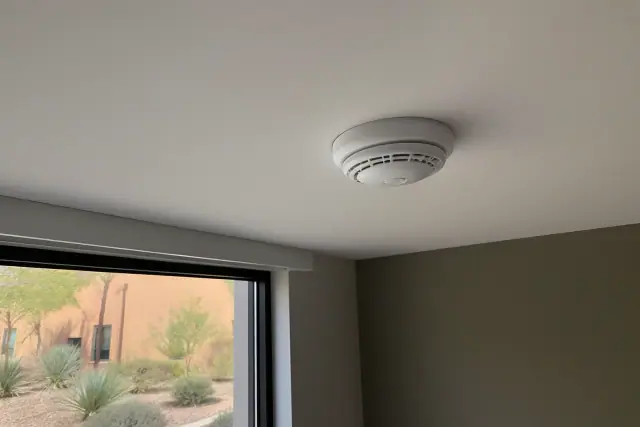
A combination home alarm with both detection methods and a sealed battery. This helps buyers distinguish sensor coverage from power and CO features.
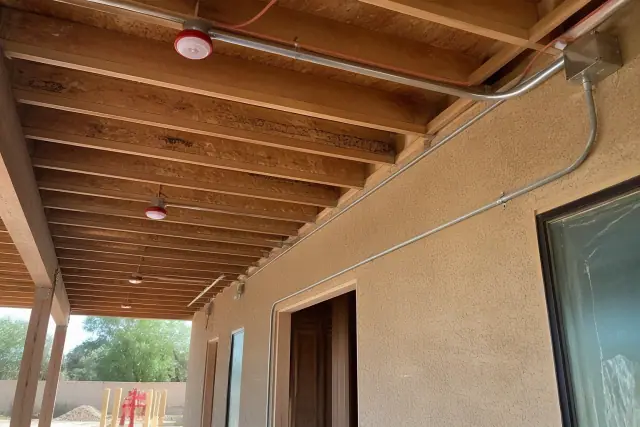
Alarms connected across bedrooms, sleeping areas, and multiple levels. Interconnection makes every unit sound when one alarm activates.
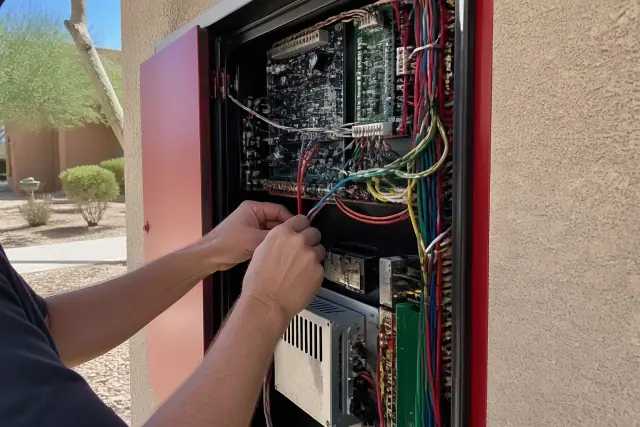
A panel identifying the exact device in alarm on a building layout. Addressable systems help larger properties locate an activation and plan for device count and future expansion.
Choose a combination smoke and CO alarm with ionization and photoelectric sensing, a sealed 10-year lithium battery, and interconnection that fits the home.
Start with a UL 864 listed system sized for the occupancy, floor plan, device count, candela ratings, circuit wiring, and future expansion needs.
Plan for an alarm in every bedroom, outside every sleeping area, and on every level of the home, including a basement.
Home smoke and CO alarms generally run $10 to $100 per unit. Basic commercial devices run $10 to $50 each, but panel, wiring, strobes, voice evacuation, and installation determine the complete system price.
| Property | Start With | Confirm Before Buying |
|---|---|---|
| Existing home | Combination smoke and CO alarms with dual sensors and sealed 10-year batteries | Room rating, placement, and a compatible interconnection method |
| New home or major remodel | Hardwired interconnected AC alarms with battery backup | Current Arizona code requirements and required locations |
| Commercial building | A UL 864 listed system designed for the occupancy and layout | Panel type, device count, NFPA 72 design, and Phoenix Fire Code review |
A single-family home in Ahwatukee and a multi-tenant office near Sky Harbor need different equipment and design decisions. Home buyers compare four broad alarm categories: ionization, photoelectric, dual sensor, and combination smoke and CO. Commercial buyers compare conventional zone panels with addressable panels that identify the exact device in alarm. The final commercial design must match the occupancy, layout, Phoenix Fire Code, International Building Code, and NFPA 72 requirements, using appropriately listed devices and panels such as UL 217 or UL 864 equipment.
Fire behavior is only one factor: ionization favors fast flaming fires, photoelectric favors slow smoldering fires, and dual-sensor alarms combine both detection methods. In new construction and major remodels, hardwired interconnected AC alarms with battery backup provide whole-home notification and keep protection active during power interruptions such as summer monsoon outages. Wireless interconnection can retrofit older homes in Encanto or Willo without opening walls, while smart integration can add mobile alerts and battery-status logs for properties left vacant part of the year. Commercial panel choice depends on the occupancy, building size, device count, wiring, notification needs, and room for expansion. Voice evacuation or mass notification may be required for high-rises, schools, assembly occupancies, and other applicable buildings under NFPA 72.
For a typical four-bedroom home, plan for at least one alarm in each bedroom, one outside each sleeping area, and one on every additional level-often six to eight interconnected units in total, depending on the layout. Put CO detectors near sleeping areas and in rooms with a fuel-burning appliance or an attached garage. Commercial buyers should ask whether monitoring is required for the occupancy, how the panel identifies an activated device, and whether the design can support future expansion. NFPA 72 calls for annual commercial inspection and testing that covers every initiating device, notification appliance, and panel supervisory circuit. Monitoring connects a panel to a 24-hour center that automatically dispatches the Phoenix Fire Department on activation, while scheduled maintenance addresses battery drift, sensor drift, and wiring faults.
Share the property type, occupancy, layout, existing wiring, and devices you are considering. A site walkthrough can confirm detector type, power source, placement, listing, panel needs, and code requirements before you receive an itemized quote.