Typical Installation Range
Phoenix projects range from a basic $600 residential retrofit to a $250,000+ full addressable commercial installation. Most small and mid-size commercial work falls between $1.50 and $6.00 per square foot installed.
Fire alarm installation in Phoenix can range from $600 for a single-panel residential retrofit to $250,000 or more for a full addressable system in a large commercial building. Phoenix Fire Alarm Systems quotes each project after a site walk because square footage, occupancy type, and existing wiring can significantly change the scope and price.
Phoenix projects range from a basic $600 residential retrofit to a $250,000+ full addressable commercial installation. Most small and mid-size commercial work falls between $1.50 and $6.00 per square foot installed.
Square footage, occupancy type, existing wiring, device count, ceiling height, conduit runs, panel type, and integration requirements determine the final price.
A site walk lets the installer confirm the layout, wiring condition, required devices, and monitoring or integration scope before preparing a project-specific quote.
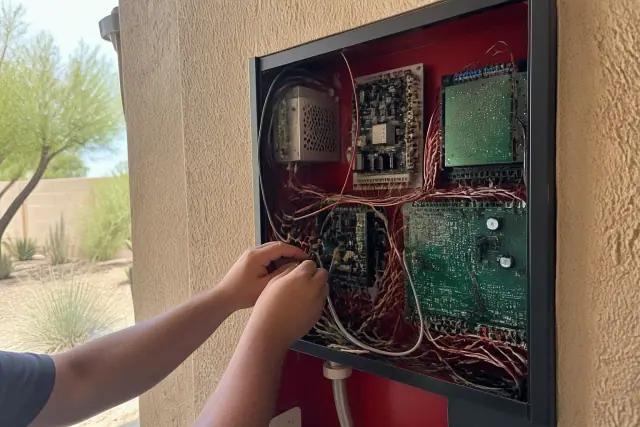
A single-panel residential retrofit with existing wiring and the electrical panel visible. This context explains why older wiring can expand the installation scope.
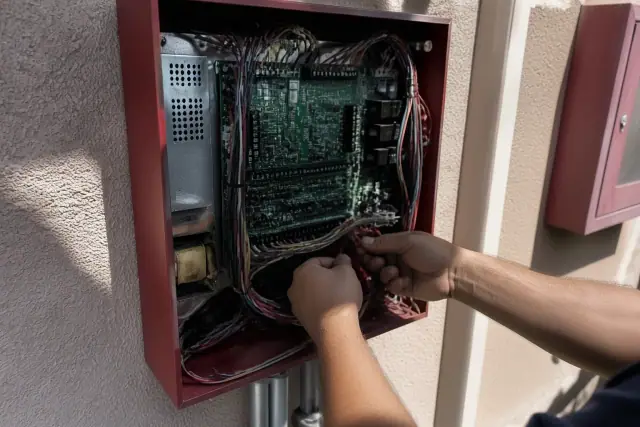
An addressable panel serving multiple zones and notification devices in a commercial building. Device density, voice evacuation, and building integration can all increase cost.
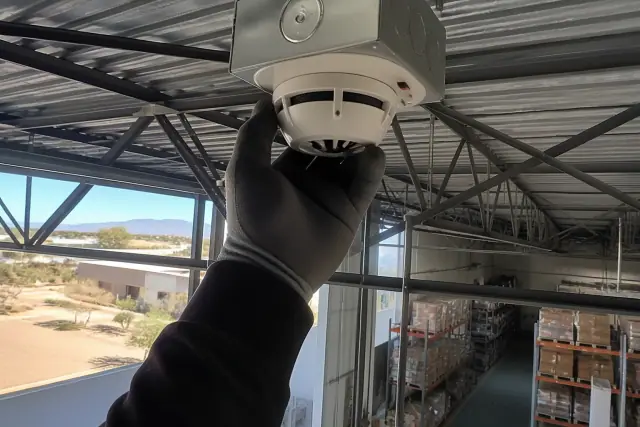
Heat detectors positioned in a dusty, high-ceiling warehouse. Detector selection and difficult access affect both device and labor costs.
A basic hardwired home setup typically costs $600 to $1,000. A single-tenant small business under 5,000 square feet generally runs $2,000 to $8,000, depending on device count and panel type.
A basic conventional system in a smaller building under 10,000 square feet runs $0.50 to $1.00 per square foot. Multi-tenant offices generally cost $1.50 to $4.00 per square foot as floor count and occupancy load increase.
Advanced addressable systems with voice evacuation and multi-zone monitoring run $2.50 to $11.00 per square foot. Full addressable systems in buildings of 50,000+ sq ft typically cost $25,000 to $250,000.
A conventional control panel starts around $500, while an intelligent addressable panel can cost $5,000 or more. Voice evacuation and mass notification add $5,000 to $30,000+; central station monitoring costs another $30 to $75 per month, with inspections and maintenance billed separately.
| Cost Item or Property | Typical Range | What the Range Covers |
|---|---|---|
| Basic detector, equipment only | $10 to $50 each | Standard smoke or heat detector before labor. |
| Addressable or specialty detector | $50 to $500 each | Devices such as duct and beam detectors before labor. |
| Smoke detector, installed | $75 to $200 each | Device and installation labor. |
| Heat detector, installed | $100 to $250 each | Often used in garages, kitchens, and mechanical rooms. |
| Manual pull station, installed | $50 to $150 each | Manual initiation device and labor. |
| Horn/strobe, installed | $75 to $200 each | Audible and visual notification device. |
| Retail space | $3,000 to $15,000 | Varies with area and sprinkler monitoring integration. |
| Warehouse | $1.00 to $3.00 per sq ft | Dust, high ceilings, and heat-detector placement affect scope. |
| School campus | $4.00 to $8.00 per sq ft | Full coverage with voice evacuation and mass notification. |
A fire alarm system can mean four smoke detectors connected to a panel in a duplex or a 40-zone intelligent system in a downtown high-rise. Across the Phoenix metro, that difference can move installation from $600 to well over $100,000; design and installation on small to mid-size commercial buildings runs $1,000 to $50,000 and can exceed $250,000 on large full-coverage projects. A useful estimate must therefore match the property and code scope rather than a flat citywide price.
Labor typically represents 40 to 60 percent of the total project cost, with device count, ceiling height, and conduit runs driving the hours required. NFPA 72 spacing rules, occupancy, and reviews by the Phoenix Fire Department Fire Prevention Division and City of Phoenix Development Services Department can affect device density and permit scope. High-rises may also need stairwell pressurization tie-ins and elevator recall, while many commercial occupancies require ADA-compliant strobes or vibrating notification units. Conventional systems cost less upfront; addressable systems can reduce troubleshooting time and false-alarm callbacks. Hardwired systems avoid a battery-replacement cycle, but a hybrid hardwired backbone with wireless expansion can limit new conduit through finished walls.
Is monitoring included in installation? No-central station monitoring typically costs $30 to $75 per month, and inspection and maintenance are separate recurring expenses. Does the City of Phoenix provide a free installed hardwired system? No, although limited smoke-alarm giveaway programs exist for qualifying households. Are wireless systems always the lower-cost choice? Hardwired systems cost more upfront but avoid a battery-replacement cycle, while hybrid systems can reduce conduit work in finished buildings. When does voice evacuation affect the budget? It can add $5,000 to $30,000+ and is part of the required scope for school systems described in this guide.
Share the property's square footage, occupancy type, current panel and wiring, and any monitoring or integration needs. A site walk can confirm device counts, access, permitting factors, and labor before the final quote.