Detector Contamination and Drift
Dust, debris, obstruction, and age-related sensitivity drift can push smoke detectors outside NFPA 72 tolerance, causing nuisance alarms or trouble signals.
Phoenix Fire Alarm Systems finds the same recurring faults in Phoenix-area high-rises, warehouses, and other properties: contaminated detectors, weak batteries, wiring and power problems, and aging panels. Identifying the exact cause matters because nuisance alarms, persistent trouble signals, a system that will not reset, and partial notification failures need different tests and repairs.
Dust, debris, obstruction, and age-related sensitivity drift can push smoke detectors outside NFPA 72 tolerance, causing nuisance alarms or trouble signals.
Loose connections, damaged conductor insulation, ground faults, degraded backup batteries, blown notification-circuit fuses, and failed transformers can all create electrical trouble conditions.
Systems 20 years or older often combine worn detector chambers, brittle wire insulation, obsolete boards, and limited parts or firmware support, increasing failures during routine testing.
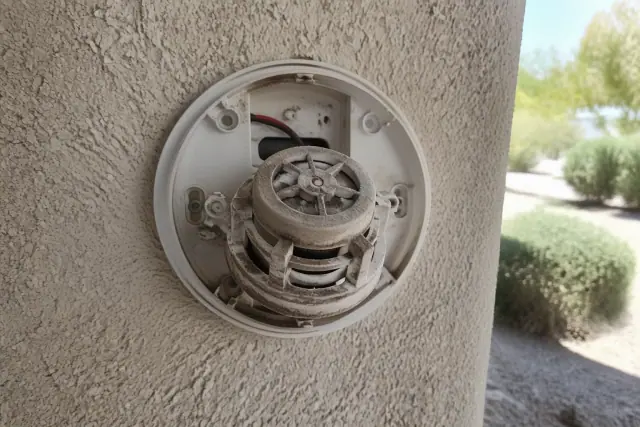
Dust film and debris around the sensing chamber. This helps explain how Phoenix monsoon and construction dust can alter detector sensitivity.
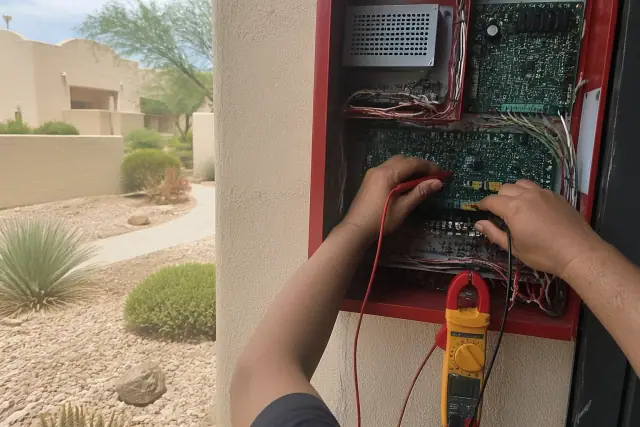
A technician tracing a ground fault from the panel to the affected circuit. The event history and circuit readings narrow the fault before parts are replaced.
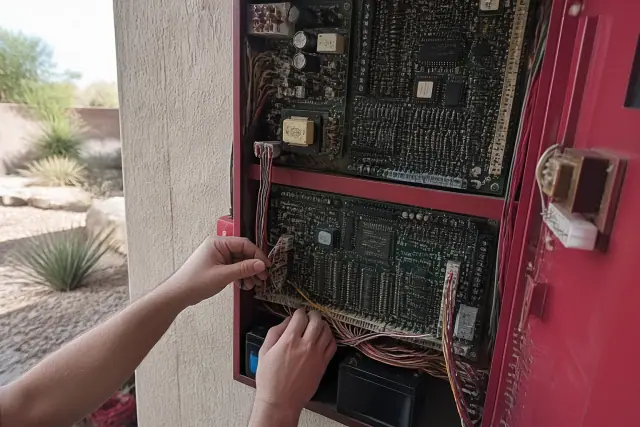
An older zone-based panel beside worn devices and unavailable replacement boards. The comparison clarifies why age, design, and parts support matter together.
The panel log can identify the zone or device address that produced the fault and direct testing to the right circuit.
Detectors near HVAC returns, kitchen exhaust, restrooms, showers, loading docks, or warehouse bays may react to dust, steam, humidity, or moving air.
A backup battery can show acceptable voltage at rest and still fail when the system loses power, so load testing is the more useful check.
Amplifier output, speaker circuits, and intelligibility need dedicated testing because one amplifier fault can silence notification across an entire floor.
| Observed Problem | Common Causes | Focused Check |
|---|---|---|
| Nuisance alarm | Dust, obstruction, poor placement, steam, or humidity | Inspect the detector chamber, placement, and sensitivity |
| Panel will not reset | Latched device, wiring short, ground fault, or panel memory | Read the event log and isolate the affected circuit or address |
| Intermittent trouble tone | Weak backup battery, loose terminal, or voltage fluctuation | Load-test the battery and inspect power connections |
| Missing voice notification | Amplifier or speaker-circuit fault | Test amplifier output and speaker circuits separately |
Common fire alarm problems usually involve contamination, battery or power faults, loose or damaged wiring, sensor drift, communication failures, or outdated controls. Phoenix monsoon storms, construction activity, and dust around loading docks can foul detector chambers and increase nuisance alarms. A persistent trouble signal or a panel that will not reset needs fault-specific testing because one condition can mask another.
U.S. Fire Administration guidance places smoke and heat detector service life at 8-10 years, while control panels generally last 15-20 years. Conventional zone wiring identifies an affected building area rather than a specific device, while addressable technology narrows the fault to a device address. Heat exposure in unconditioned panel rooms during Phoenix's extended periods above 100 degrees can shorten panel life, and warehouses near I-10 or Loop 202 can collect more traffic and construction dust. Parts availability, firmware support, and whether a building constructed before 2005 still uses its original conventional panel also affect whether repair or upgrade planning makes sense.
Owners often ask what replacement may cost, how frequently systems need testing, and when a repair should become an upgrade. Phoenix-area planning ranges are generally $1 to $3 per square foot for commercial system replacement, $10-$50 per detector, and $50-$500 per voice speaker or strobe depending on coverage needs. The Phoenix Fire Department's Fire Prevention Bureau requires annual testing and documented commercial inspection records consistent with NFPA 72 and the adopted International Fire Code. Within Phoenix city limits, repeat false alarms cost $105 per incident after the first within a 365-day period, which makes recurring nuisance alarms worth addressing promptly.
If nuisance alarms, persistent trouble signals, or a panel that will not reset are disrupting your property, request a focused inspection. Event-log review, individual device testing, battery load testing, and separate voice-circuit checks can identify the fault before repair or replacement decisions are made.