Monthly Alarm Test
Press and hold each test button for one to two seconds and listen for a strong, clear horn. On a hardwired interconnected circuit, triggering one alarm should sound every unit.
For Phoenix homes and commercial properties, Phoenix Fire Alarm Systems recommends a maintenance routine built around testing, cleaning, battery care, and periodic inspection. These checks help uncover weak sounders, dust-blocked sensors, aging devices, and interconnection faults before an alarm is needed.
Press and hold each test button for one to two seconds and listen for a strong, clear horn. On a hardwired interconnected circuit, triggering one alarm should sound every unit.
Use a soft brush attachment to vacuum vents and grille openings, or use short bursts of compressed air held upright. This clears dust, cobwebs, and insect debris without introducing moisture into the sensor chamber.
Replace standard 9-volt batteries at least annually, then check the manufacture date, mounting, housing, and signs of insect intrusion. Commercial and interconnected systems also need documented sensitivity, wiring, and panel checks.
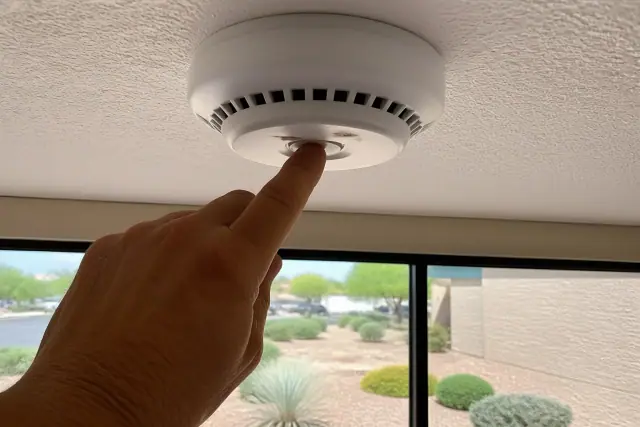
Press the test button while the alarm remains mounted, then listen for a strong, clear horn. Repeating this check monthly helps reveal a weak battery, blocked speaker, or failed unit.
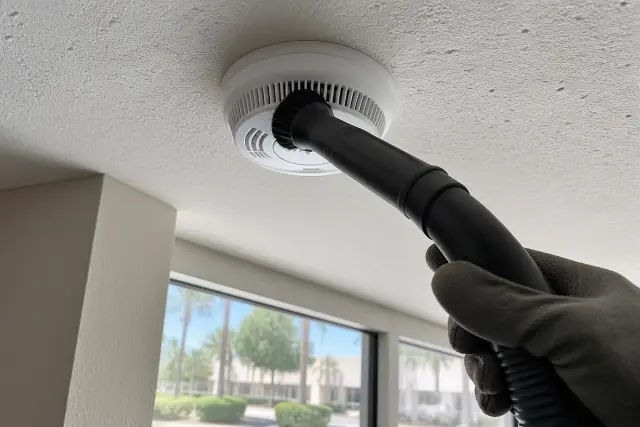
A soft vacuum brush clears dust from the vents without opening the alarm. This protects airflow to the sensor chamber while removing debris common in Phoenix's dry conditions.
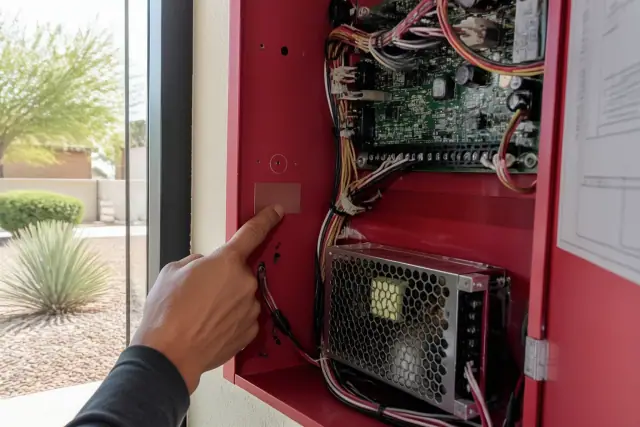
The manufacture date and housing condition help distinguish a serviceable alarm from one due for replacement. Check for cracking, yellowing, insect intrusion, and loose mounting during the annual review.
Test every unit and wipe the exterior with a dry cloth. Confirm the horn is audible from each sleeping area with doors closed.
Vacuum every alarm, replace standard alkaline batteries when using a twice-yearly cycle, and inspect for cracking, discoloration, yellowing, or loose mounting.
Replace applicable batteries and review each unit's manufacture date. Arrange sensitivity and visual inspection for commercial and interconnected systems under NFPA 72 schedules.
Replace the entire smoke alarm even if the test button still works. A sealed 10-year lithium unit cannot be opened for a battery change and is replaced as a complete device.
| Maintenance Task | Timing | What to Do |
|---|---|---|
| Alarm test | Monthly | Hold the test button for one to two seconds and confirm a clear alarm; one test should sound every interconnected unit. |
| Vent cleaning | Every six months | Vacuum vents with a soft brush or use short bursts of compressed air held upright. |
| Battery care | At least annually | Replace standard 9-volt batteries; use a twice-yearly cycle for standard alkaline units in Phoenix's dry heat. |
| Professional inspection | Annually | For commercial and interconnected systems, check sensitivity, wiring, panel connections, and test records. |
| Full replacement | At 8-10 years | Use the manufacture date, not appearance alone; replace a sealed 10-year unit as a whole when it reaches end of life. |
Smoke alarm care has four recurring tasks: testing, cleaning, battery replacement, and periodic professional inspection. Testing checks the horn, strobe, and circuitry; cleaning keeps airflow paths open; battery care prevents silent power loss; and professional testing detects sensor drift or wiring faults. Photoelectric, ionization, dual-sensor, and smart alarms all still need physical cleaning, while hardwired units also need a full interconnection test. Confirm alarms remain in every bedroom, outside sleeping areas, and on every level of the home.
Across Phoenix-a city of over 1.6 million residents spread across 517.9 square miles-maintenance conditions range from dusty single-story homes to multi-story commercial systems. Dry heat, dust storms, HVAC airflow, garages, attics, and homes near unpaved areas can justify cleaning more often; attic temperatures can exceed 140°F in summer, so check for heat-related yellowing or cracking. Keeping an alarm at least 10 feet from cooking appliances can reduce nuisance alarms from cooking smoke, while persistent false alarms after cleaning may indicate a failing sensor. Addressable, monitored, voice evacuation, and building-automation systems add panel diagnostics, documented test logs, and cellular, IP, or phone-line communication checks.
Can you clean an alarm yourself? Basic vacuuming and exterior wiping are appropriate, but sensitivity testing, interconnection diagnostics, and panel troubleshooting require calibrated equipment and professional training. If a sealed alarm chirps, replace the whole unit; if another alarm keeps chirping or false-alarming after cleaning and a battery change, have the sensor evaluated. Basic residential upkeep may cost little beyond batteries, while annual commercial inspection and testing typically runs $300 to $1,000 for a basic system; more complex maintenance contracts range from $500 to $2,000 annually depending on system size, device count, monitoring, and panel complexity.
If an alarm keeps chirping or false-alarming after cleaning and battery replacement, or an interconnected or commercial system fails a whole-system test, request a professional inspection. A technician can check sensor sensitivity, wiring, panel function, battery backup, and monitored communication paths.